Getting Clean Energy Back on Track
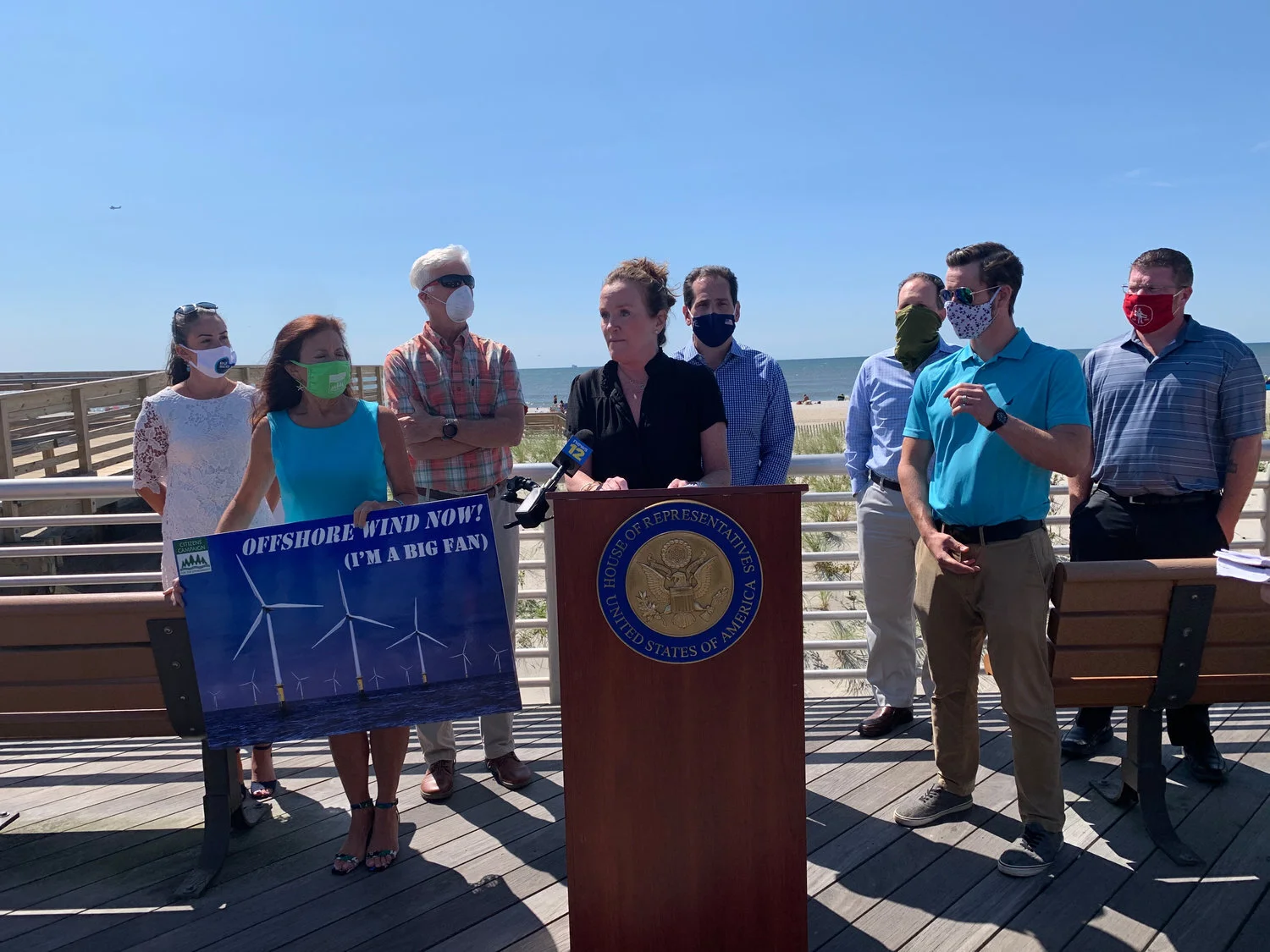
While New York is pushing forward with three offshore wind projects and a new solicitation for up to 2,500 MW of additional offshore wind power, the federal government has stalled. We need the U.S. Department of Interior to designate additional “Wind Energy Areas” (areas appropriate for offshore wind farm siting) off the coast of New York. These areas should have been designated in 2019, and we cannot afford further delays as we push to meet our state mandate of 9,000 MW of offshore wind by 2035. In July, we joined Congresswoman Rice, NYS Senator Kaminsky, environmental organizations, and labor groups in Long Beach to call on our federal government to stop delaying and announce new “Wind Energy Areas” in 2020.
Exploring the Potential for Offshore Wind in the Great Lakes
NY’s nation-leading climate law mandates 70% renewable energy by 2030 and carbon-free electricity by 2040. Offshore wind power in the Atlantic, and potentially in the Great Lakes, will play a critical role in meeting these important and ambitious clean energy mandates. Therefore, the state recently proposed to study the feasibility of offshore wind in the Great Lakes (there are currently no wind farms in the Great Lakes). As New York considers the potential for offshore wind in the Great Lakes, it is essential that the public has access to fact-based information about offshore wind and its potential benefits and impacts on the lakes. Therefore, we have put together an educational page on our website with a series of fact sheets on Great Lakes offshore wind—we invite you to take a look and learn more!
Protecting Connecticut’s Water Resources
Last year, Connecticut approved the State Water Plan (SWP), which will ensure that water is a public trust and that CT’s current and future water supply needs are met equitably for years to come. We are now working to see this landmark water protection plan implemented and engage the public in the process. In July, CCE’s Lou Rosado Burch became chair of the newly-formed Outreach & Education subcommittee of the SWP Implementation Working Group. This new subcommittee will develop a public outreach strategy for individuals, community groups and businesses about the SWP and what it means for CT communities and regulated industries. We’ll be working with our subcommittee partners to do outreach on public water use, water conservation, drinking water quality, and more.
Harmful Algal Blooms are Still a Threat Across New York!
It’s late in the summer, but harmful algal blooms (HABs) are STILL posing an immense threat to our communities’ drinking water, public health, outdoor recreation and wildlife! HABs are erupting across NY more frequently and more aggressively—in 2019, over 1,000 HABs were present in NY waterbodies. If you see a HAB in a lake or waterbody (looks like spilled green paint or pea soup), be sure to avoid it and report it using the DEC Suspicious Algal Bloom Report Form!