Highlights and Happenings: July 2023


Image by Dimitris Vetsikas from Pixabay

Help CCE build on our success, and support our campaigns to protect public health and the environment in NY and CT. 
Make a contribution today.


Highlights

Tell Governor Hochul to Save the Bees! 
After years of hard work and advocacy, the NYS Legislature recently passed the Birds and Bees Protection Act! If signed into law, it would ban the most harmful and unnecessary uses of toxic neonicotinoid (“neonic”) pesticides. Neonic pesticides not only kill bees at an alarming rate, but they also pollute our water, kill wildlife, and threaten public health. Our Executive Director released this brief statement in support of the bill. Now we need YOUR help to urge Governor Hochul to sign this monumental legislation into law! Join us in calling on the Governor to sign the bill by sending an email today! 

Weighing in on the Future of the Great Lakes  
The EPA is currently developing a plan to guide Great Lakes restoration efforts over the next five years—helping determine how billions of dollars in federal investments will be allocated. At an engagement session held in Rochester in July, we urged the EPA to continue progress on existing priorities (cleaning up toxic hot spots, restoring habitat, and more) while also focusing on protecting coastal communities from climate change and supporting restoration projects in underserved communities. Please take a moment and use our template to submit a comment to the EPA via email! 


Happenings

Pushing for Stronger PFAS Standards 
Last year, the EPA proposed new federal drinking water standards of 4 parts per trillion (ppt) for the toxic “forever chemicals” PFOA and PFOS, which is significantly stronger than the NYS standard of 10 ppt. EPA has found that there is virtually no safe level of PFAS exposure, making stronger standards essential. While these standards are a necessary step to tackle existing water contamination, we must also prevent additional PFAS chemicals from entering our waterways. In July, we joined U.S. Senator Kirsten Gillibrand to call for passage of the Clean Water Standards for PFAS Act of 2023, which would prevent manufacturing facilities from discharging PFAS chemicals into our waterways in the first place. 

Fighting for Clean Water in Suffolk County 
Nitrogen pollution impacts every waterway in Suffolk County. We fought for state legislation that would allow Suffolk residents to vote on a clean water ballot initiative this November. We needed the Suffolk County Legislature to put the issue on the ballot and let the public decide if an increase of 1/8 cent in the county sales tax should be dedicated to protecting water resources by fixing sewer and septic infrastructure. Despite years of work to get here and a large coalition of environmentalists, labor unions, chambers of commerce, civic organizations, and local businesses coming together in support, the Suffolk Majority voted no in July. The public was denied the right to vote on clean water this year. This was a huge disappointment, but we’re never done fighting for clean water. 
LI Water Quality at an All-Time Low 
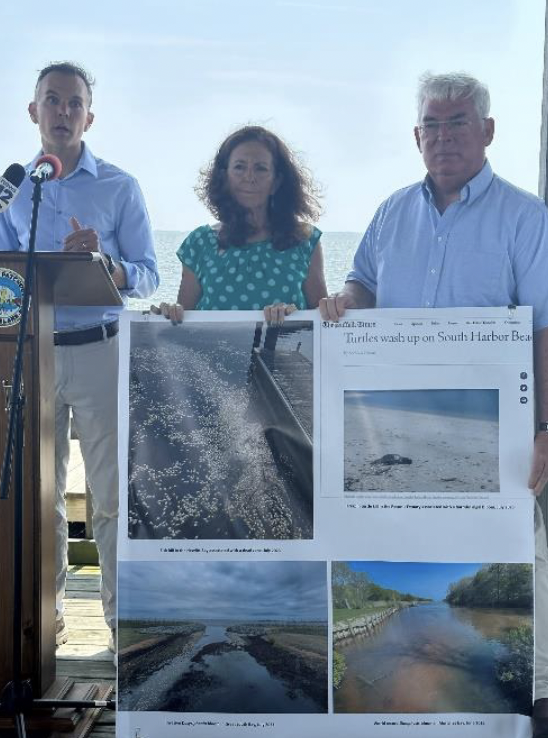
Bad news for water quality on Long Island. We joined Dr. Gobler from Stony Brook University and The Nature Conservancy to unveil new data showing that the summer of 2023 is tracking as the worst water quality on record for Long Island. Excessive nitrogen from sewage is the main culprit—causing declining water quality, toxic algal blooms, fish kills, and turtle kills. Some of our harmful algal blooms are not only the worst in Long Island’s history but some of the most intense on record in the world. If you missed it, you can watch the press conference here. Suffolk’s clean water referendum would have helped leverage state and federal funding and solve some of our nitrogen pollution issues, which is why we and our partners are continuing to fight for funding to upgrade our sewage and septic systems. 

Restoration Project Spotlight: Using Rain Gardens to Protect Lake Erie 
Rain gardens play an important role in capturing polluted runoff, reducing flooding, preventing sewage overflows, and supporting biodiversity. In July, we joined with the Erie County Water Quality Committee to tour rain gardens in the Town of Evans, NY. These rain gardens in Evans Town Park not only look beautiful and support numerous pollinators, but they also prevent contaminated water from urban and rural roadway runoff from reaching Lake Erie (located just across the street)! 


Suffolk County Executive Candidate Forum 
Last month, we co-hosted the Suffolk County Executive Environmental Candidate Forum with the NY League of Conservation Voters Environmental Fund at Stony Brook University. There were hundreds of people in attendance to hear from candidates Ed Romaine (R) and Dave Calone (D) about their plan to protect our environment, public health, and our communities if they are elected. Thanks to NYLCV for organizing this important and very informative event. 
Celebrating Solar Energy 
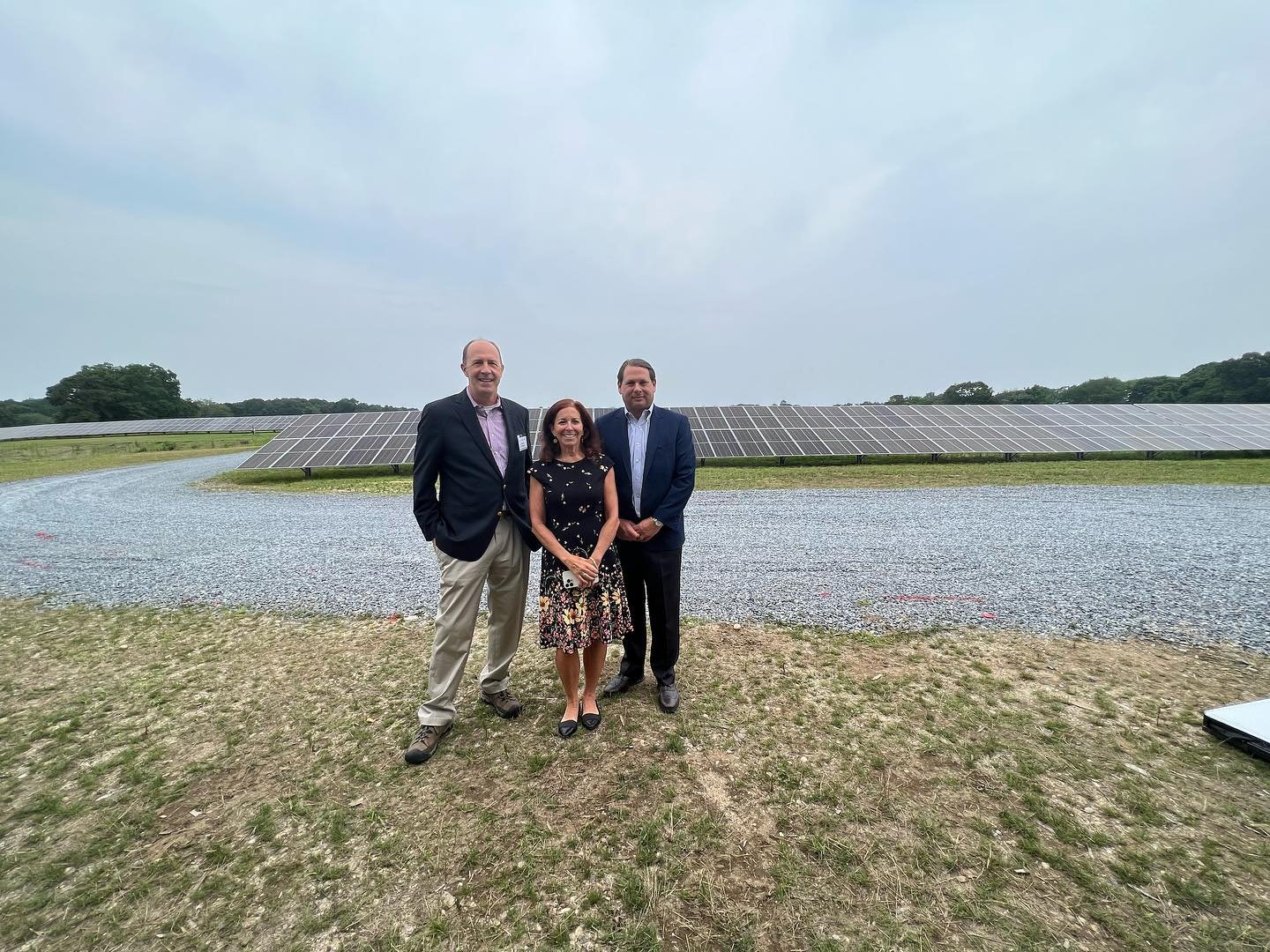
The Calverton Solar Energy Center on Long Island celebrated its one-year anniversary in July. The 23 megawatt facility is currently providing clean, renewable solar energy to 4,000 homes. We joined National Grid US Ventures, the Long Island Power Authority, and NextEra Energy for a press conference and visit to the solar farm, which is helping NY meet its ambitious climate goals and reducing greenhouse gas emissions in Suffolk County.

Understanding the Health Risks of 1,4-Dioxane on Long Island 
Yale Superfund Research Center has crafted a study to better understand the impact of 1,4-dioxane exposure on Long Island residents. This spring, we launched our partnership with Yale to provide education and outreach to inform Long Islanders about this new, exciting program. If you live on Long Island and are interested in participating and finding out if you have been exposed to 1,4-dioxane, you can find out more here. We will also be joining Senator Palumbo on August 9th at Riverhead Library for a community meeting to discuss the impacts of 1,4-dioxane on Long Island and this important health study. Register for the meeting here. 

Sea Turtle Release 
In July our team attended the sea turtle release of eight turtles that were being taken care of by the Atlantic Marine Conservation Society. It was an exciting evening as we watched these creatures return to their ocean homes. We had the pleasure of releasing one of the eight sea turtles. Thanks to AMSEAS for this incredible experience! Watch a video of the turtle release here. 

Transitioning to Offshore Wind 
New York is poised to be a national leader in offshore wind, with five wind farms already selected and a mandate of 9,000MW of offshore wind by 2035. This will not only bring environmental and health benefits to our communities but will also create thousands of jobs and make NY a hub of offshore wind development. In July, we continued our work to support offshore wind: 

  • What’s Brewin’ Offshore. We had a fun educational evening networking and discussing offshore wind at Six Harbors Brewing Company in Huntington, LI with New York League of Conservation Voters, Climate Jobs NY, the Long Island Association and many of our Wind Works LI partners. Thanks to Anabaric for sponsoring the event! 

  • Our Offshore Wind Future, LI Herald. In July we continued to educate the public on the south shore of Nassau County, where the Empire Wind 2 cable connection will be powering 600,000 homes. We placed an 8-page educational piece, “Our Offshore Wind Future,” in the Long Island Herald – if you missed it you can check out the piece here.

Republican legislators fail to approve Suffolk County Water Quality Restoration Act for public vote

Republican legislators fail to approve Suffolk County Water Quality Restoration Act for public vote

At yesterday’s Suffolk County Legislature general meeting, Republican legislators voted to recess the hearing on the Water Quality Restoration Act, preventing its presence on the November ballot for a public vote.

Kirsten Gillibrand seeks new regulations for perfluoroalkyl, polyfluoroalkyl

Kirsten Gillibrand seeks new regulations for perfluoroalkyl, polyfluoroalkyl

New federal guidelines proposed by Sen. Kirsten Gillibrand to regulate “forever chemicals” and hold polluters accountable could lead, she says, to cleaner drinking water on Long Island.

Long Island MacArthur Airport Superfund site: State DEC, Islip negotiating agreement on cleanup, officials say

Long Island MacArthur Airport Superfund site: State DEC, Islip negotiating agreement on cleanup, officials say

The state Department of Environmental Conservation is negotiating an agreement with the Town of Islip for cleanup at Long Island MacArthur Airport in Ronkonkoma, which was declared a state Superfund site in February, both the DEC and the town told Newsday.

Calone, Romaine talk environmental problems in county executive debate

Calone, Romaine talk environmental problems in county executive debate

Republican Brookhaven Town Supervisor Ed Romaine visited Stony Brook University to address Suffolk County’s environmental concerns at a forum against Democrat Dave Calone in the race for county executive. 

Long Island water quality has hit a low point, environmentalist says

Long Island water quality has hit a low point, environmentalist says

“You could see the bottom of the water,” Montefusco recalled Thursday as he stood on the dock with several friends including Marty Lange, 86.

“Now, you can take a bright yellow, a chartreuse piece of line, drop it 2 inches into the water and you can’t see the line anymore,” Lange said.

Just a few feet away, Christopher Gobler, a professor at Stony Brook University’s School of Marine and Atmospheric Sciences, stood with local environmentalists and unveiled troubling data that showed water quality hitting an “all-time low” on Long Island since he started monitoring it about a decade ago.

Environment Advocates Want New York State To Take Swift Action on PFAs

Environment Advocates Want New York State To Take Swift Action on PFAs

As the Environmental Protection Agency (EPA) issues health advisories and proposes tighter regulations for per- and polyfluoroalkyl substances (PFAs) in U.S. drinking water, environment advocates have urged New York State to take quick action to protect residents from these harmful chemicals.

Water quality is at an ‘all time low’

Water quality is at an ‘all time low’

Dr. Chris Gobler, of Stony Brook University's Gobler Laboratory, met with Citizens Campaign for the Environment and the Nature Conservancy earlier today at Mascot Dock in Patchogue Village to debrief the current Long Island water quality.

Want to be Part of a New Public Health Study on 1,4-Dioxane?


CCE, Senator Anthony Palumbo, and the Yale Superfund Research Center will be hosting a free community meeting on August 9th to discuss the impacts of 1,4-dioxane and Yale’s new health study on Long Island

1,4-Dioxane is an emerging contaminant of concern in Nassau and Suffolk Counties. This chemical, referred to as a "forever chemical," has been used in industrial practices and was found in 80% of common household products tested, including shampoo, body wash, laundry detergent, baby products, and dish soap. The EPA has listed 1,4-dioxane as a carcinogen, but its effects on public health are still not well known. Unfortunately, Long Island has some of the highest levels of 1,4-dioxane in drinking water in the nation.

The Yale Superfund Research Center is in the initial phase of investigating 1,4-dioxane exposure on human health in Long Island communities. CCE has partnered with Yale Superfund Research Center in a 1,4-dioxane health study for Long Island residents. This study seeks to engage Long Island residents to better understand the impact of 1,4-dioxane exposure on public health. We will be recruiting community members to participate in this drinking water and blood sample study. 

To learn more about this groundbreaking study, please join our Community Meeting with Senator Anthony Palumbo and the Yale Superfund Research Center. Register here

When: Wednesday, August 9, 2023, at 6:30 PM
Where: Riverhead Free Library, 330 Court St, Riverhead, NY 

Thank you for joining us!

Sincerely,
All of Us at CCE

SAVE THE BEES!


Tell Governor Hochul to Ban Toxic Neonic Pesticides in New York!

After years of hard work and advocacy, the NYS Legislature recently passed the Birds and Bees Protection Act! If signed into law, it would ban the most harmful and unnecessary uses of toxic neonicotinoid (“neonic”) pesticides. Neonic pesticides not only kill bees at an alarming rate, but they also pollute our water, kill wildlife, and threaten public health. Now we need YOUR help to urge Governor Hochul to sign this monumental legislation into law!

The Birds and Bees Protection Act (S.1856A/A.7640) would ban the most harmful and unnecessary uses of toxic neonic pesticides. The Act bans neonic treated corn, soybean, and wheat seeds and bans cosmetic uses (e.g. lawns, gardens, golf courses). This will eliminate at least 85% - 90% of all neonics used in New York, protect water quality, and ensure we are not poisoning our birds, bees, and other pollinators with this toxic pesticide. We need Governor Hochul to sign this crucial legislation into law! Email Governor Hochul today and urge her to sign the Birds and Bees Protection Act.

Watch the video message from our Executive Director, Adrienne Esposito, calling for the Governor to sign this critical bill into law

Additional Background Information:

Pollinators, such as honeybees, butterflies, moths, and hummingbirds, are essential components of our food web. Massive bee die-off events and colony collapse disorder are putting our ecosystem and food production at risk. This rise in bee deaths has been largely linked to the explosive growth in the use of neonics and other harmful pesticides. Neonics are pesticides that attack the nervous system of insects. These pesticides are largely added as a seed coating to plants, such as corn, wheat, and soybeans and are used as a spray for ornamental plants and turf grass. As a seed coating these chemicals persist and spread as the plant grows, making the entire plant toxic to bees and other pollinators.

Neonics are also threatening New York’s waters. A 2018 U.S. Fish and Wildlife study found neonics in New York’s streams “in excess of toxicity and regulatory thresholds.” Additionally, extensive testing of New York’s surface waters by the USGS in 2016, found the neonic imidacloprid in nearly 40% of samples. There are currently 117 pesticides found in Long Island’s groundwater, with neonics being one of the most prevalent pesticides detected. Neonics are persistent in our water and environment, posing a serious threat to health and pollinators.

Corn, soy, and wheat treated seeds account for an estimated 73% of all neonics used in New York.  The use of neonics on lawns, gardens, and ornamental plants (aka cosmetic uses) make up an additional 15%. A 2020 report by Cornell University found that neonic treated corn, soy, and wheat seeds provide "no overall net income benefits" to farmers yet pose significant risk to bees and other pollinators. Likewise, cosmetic uses pose a high risk to pollinators but are easily replaced with safer alternatives. These uses are unnecessary and must be banned to protect our pollinators, water, and health.

Thank you! Together we can make a difference.

Sincerely,
All of Us at CCE

Last chance for Suffolk County Water Quality Restoration Act to get on November ballot

Last chance for Suffolk County Water Quality Restoration Act to get on November ballot

The Suffolk County Water Quality Restoration Act was designed to establish a countywide sewer district and water quality fund, and extend an existing fund intended to improve resident drinking water. If approved by the county legislature, it will be subject to a mandatory referendum in the November election, but there’s only one more chance to garner majority support before the July 25 general meeting.

What the Equinor survey ending later this year means for Island Park?

What the Equinor survey ending later this year means for Island Park?

It’s been a quiet few months on the Equinor front, until now. The multi-billion-dollar Norwegian broad energy company has begun surveying south shore waters for old munitions and will soon be collecting sediment samples. In addition, “the planned offshore wind transmission act” known as bill A.7764 has passed through the State Assembly and Senate. The bill is intended to expedite wind power plants, much to environmental and labor groups glee and Republican politician’s chagrin.

Weigh in on the Future of the Great Lakes!


Image by dsurver from Pixabay


The U.S. Environmental Protection Agency (EPA) is developing a plan to protect and restore the Great Lakes and they need to hear from you!

New York’s Great Lakes are a valuable resource that we rely on for our drinking water, recreation, tourism, economic development, and a healthy environment. Since 2010, the Great Lakes Restoration Initiative (GLRI) has been providing federal funding to address the biggest threats to the Great Lakes. Investments have been made in successful efforts to restore habitats, address invasive species, clean up toxic hot spots, reduce pollution at the source, and more! While investments from the GLRI have yielded many successes, there is still work to be done.

The EPA is currently developing Action Plan IV, which will guide GLRI restoration efforts over the next 5 years (2024 - 2028) and will help determine how billions of dollars in federal investments will be allocated. We need to make sure that the updated plan continues progress on existing priorities while also including critical updates to address additional challenges.

There are three opportunities to weigh in with the EPA:

1. Attend an in-person public engagement session (for those near the Rochester area): On Wednesday, July 19, the U.S. EPA is hosting an in person public engagement session in Rochester, NY. At the session, the EPA will provide an overview of the GLRI and Action Plan IV, and then the public will be able to ask questions and provide comments. Join us at this engagement session to learn more about the GLRI and have your voice heard on what needs to be done to protect New York’s Great Lakes. This engagement session is free and open to the public.

Date: Wednesday, July 19, 2023
Time: 6:00pm – 8:00pm
Location: Rochester Museum and Science Center, 657 East Ave.

2. Submit a comment to the EPA via email! Use our email template and feel free to add your own suggestions and concerns.

3. Attend a virtual public engagement session: For those unable to make an in-person session, EPA will be holding an online public engagement session on Wednesday, August 23, 6pm – 8pm (EST). Register here.

Talking Points for Weighing in on Action Plan IV

  • We need to continue and accelerate existing steps to revitalize public, economic, and Great Lakes ecosystem health.

  • Two critical updates that we urge the EPA to highlight in Action Plan IV include:

1. Invest in climate change resiliency – Climate change is already impacting the Great Lakes and our communities. Investments in restoring Great Lakes coastal habitat, wetlands, and floodplains are examples of climate change resiliency projects that improve the regions’ ability to withstand the effects of climate change, while also improving the health of the ecosystem.

2. Make investments that promote equity – Often communities that are low-income and communities of color are disproportionately impacted by pollution and environmental degradation. Investments in the GLRI have accelerated restoration across the Great Lakes—these investments should ensure that communities most impacted also benefit from restoration efforts.

Thank you for taking action!

Sincerely,
Your Friends at CCE

Toxic ‘forever chemicals’ called PFAS detected in dozens of LI water districts

Toxic ‘forever chemicals’ called PFAS detected in dozens of LI water districts

Nearly half of the tap water in the U.S. is contaminated with toxic chemicals known as PFAS, according to a new study, and Long Island is no exception. The contaminants have been linked to weakened immune systems, cancer and other health problems.

State urged to adopt lower standards for 'forever chemicals'

State urged to adopt lower standards for 'forever chemicals'

Environmental advocates from across Long Island and throughout New York urged the State Health Department Wednesday to mirror an Environmental Protection Agency proposal and reduce the amount of harmful "forever chemicals" in drinking water to the lowest levels that tests can detect.