The Unstoppable Sand Land

The Unstoppable Sand Land

IN THE HILLS of the Hamptons, next to one of the most expensive golf clubs in the country, sits a big pit. It spans an area of just over 30 acres — about six city blocks — and drops more than 100 feet deep in some parts, with heaps of sand scattered throughout. Heavy machinery scoops that sand out of the ground, sifts it, and loads it onto trucks for sale. It’s a mine called Sand Land, and it operates much as it has for more than half a century.

It isn’t supposed to. New York’s highest court ruled more than six months ago that Sand Land’s permits were invalid, and regulators told the company to stop mining. The town slapped a stop work order at the entrance. The state Department of Environmental Conservation (dec) sent inspectors and issued violation notices. Sand Land kept digging.

Fact Check: The Truth About Wind and Whales


Opponents of offshore wind have wrongly blamed the renewable energy for recent whale strandings and deaths. Wind turbines do not cause whale deaths! 

Here are the facts:

In 2017 the National Ocean and Atmospheric Administration (NOAA) declared an “unusual whale mortality event” for whales. This designation was based on data that showed a steep increase in deceased whales in 2016 and 2017 washing up on America’s shores. This event began prior to offshore wind siting in the US. Misinformation about a connection between offshore wind development harming whales is simply wrong. This misconception is not based on scientific facts.

Wind surveys do not kill whales 
When NOAA declared an unusual whale mortality event in 2017 there was no offshore wind project approved in NY or NJ and it was long before offshore wind survey work was conducted. A second misconception is that offshore wind survey work requires the same exploratory equipment as natural gas and oil companies. This is simply not true.  Oil and gas exploration requires seismic air guns that penetrate deep into the sea floor. Seismic air guns create one of the loudest man-made sounds in the ocean that damages marine life, including whales. The sound can travel several miles through the ocean at 220-250 decibels. Blasts are repeated as often as every 10 seconds for days and weeks. 

Offshore wind surveying uses sound waves known as High Resolution Geophysical (HRG). These surveys use higher frequencies than those used in seismic air guns and image smaller structures with a high level of detail. Additionally, most of the equipment for these surveys cannot be heard by humpback whales. According to the Bureau of Ocean and Energy Management “physical attributes of HRG sources-such as beamwidth, exposure duration, and frequency – make them significantly unlikely to result in harm of marine mammals.” 

So what is causing the whale deaths?
Scientists are working to understand the cause of increased whale strandings. The two most common species impacted are Minke Whales and Humpback whales. When whales die, they undergo what is called a necropsy to determine the cause of death. These procedures are challenging when dealing with a 25-ton marine mammal, many of which are in various stages of decomposition. Scientists tell us that Minke Whales are showing signs of infection around the heart area, and 40% of Humpback whales are showing clear signs of ship strikes. Another cause of death is entanglement with commercial fishing gear which weighs down whales, decreases their mobility, and results in a diminished ability to feed.  

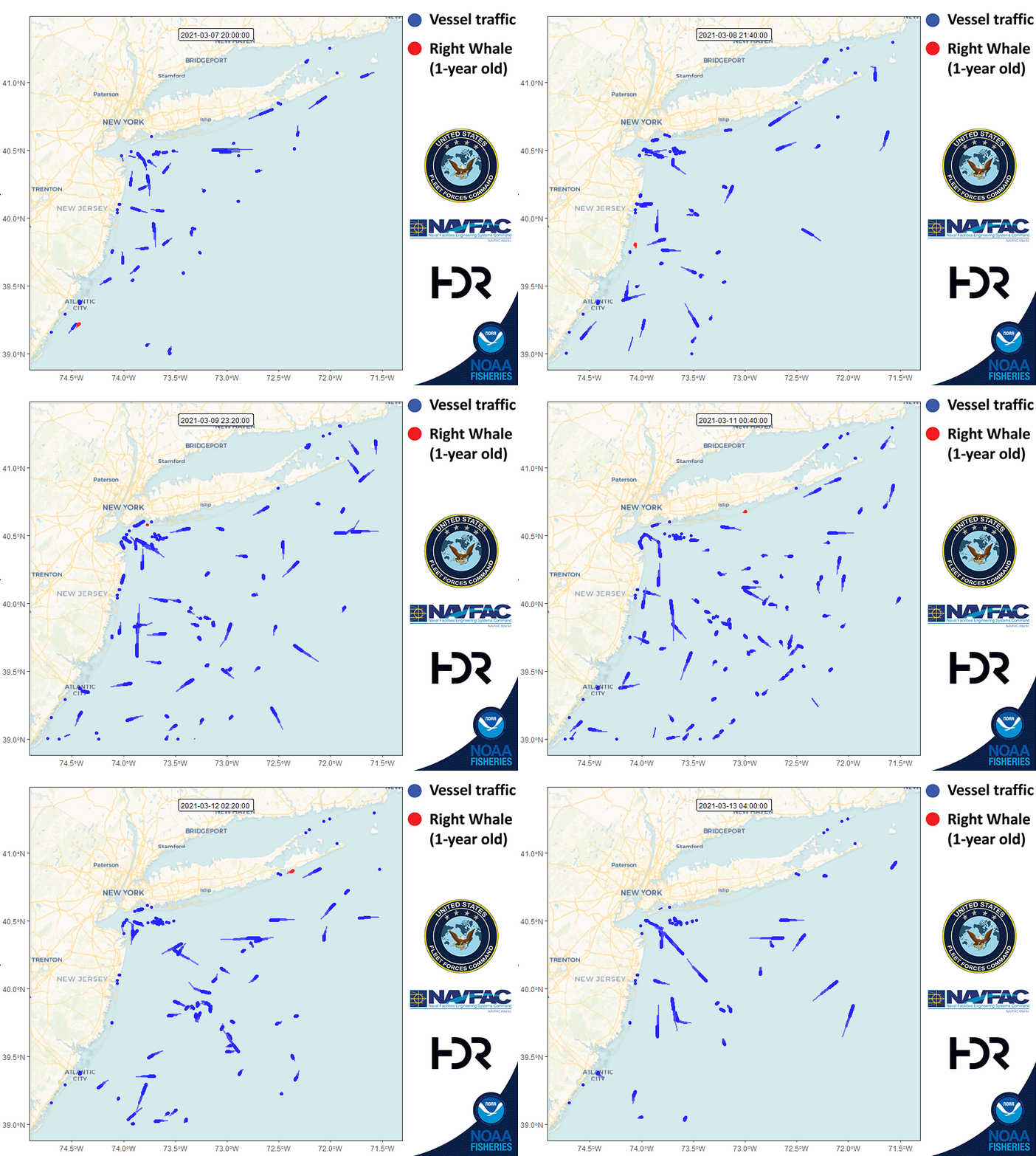
Many scientists believe that whales are here in greater numbers due to changing water temperatures and an increase in bait fish off our shores. The bait fish are a beloved food source for whales, but this food source may be leading whales into shipping lanes making them vulnerable to ship strikes. Also, according to the Port Authority there had been a 35% increase in ships from 2019 into New York Harbor, adding another serious threat to whales.

How do we protect whales?
We know that ship strikes, along with commercial fishing are a real threat to whales. Over 20 environmental groups have called on Congress to allocate $20 million for better whale monitoring, which would help decrease ship strikes, and to fund marine mammal response and necropsy efforts. 

One of the greatest threats to not only whales but all wildlife and our oceans is climate change. Warming temperatures, ocean acidification, changing food webs, and altered migration and feeding habits put whales at greater risk. One thing we can do locally is support the transition off fossil fuels and towards renewable energy, which will decrease local ocean acidification in our local waterways, protect local marine species and fisheries, and help combat global climate change. Offshore wind is the solution, not the problem.

If you want more information, check out:

  • Lunch and Learn: Whale Tales and Whale Facts, click here.

  • Offshore Wind & Whale Protection factsheet, click here.

  • Understanding Ocean Sounds & Whales factsheet, click here.

  • Fight Climate Change with Offshore Wind factsheet, click here.

  • Offshore Wind Future, Long Beach Herald. July, 2023, click here.

Sincerely,
All of us at CCE

SCWA unveils new water treatment systems for Huntington

SCWA unveils new water treatment systems for Huntington

In a secluded residential block on Northport’s McKinney Avenue lies an advanced water treatment center masquerading as a barn.

At this site, representatives from the Suffolk County Water Authority joined state and local public officials for a press event on Thursday, Aug. 24, announcing eight new high-tech water filtration systems for local drinking water.

CCE’s Environmental Equinox Awards Gala


Join us September 27, 2023 to Celebrate 38 Years of Grassroots Advocacy! 

For more details and to Purchase tickets  https://www.citizenscampaign.org/annual-gala 

Get ready to join CCE for our Environmental Equinox Awards Gala to celebrate over three and half decades of grassroots accomplishments and our 2023 honorees. CCE is excited to honor Doreen Harris, President of New York State Energy and Research Authority (NYSERDA) for her dedication and leadership in prioritizing renewable energy and fighting climate change. CCE is also honoring Danielle Campbell, Journalist & Environmental Reporter for her dedication to protecting our environment and public health for 3 decades! Her influential reporting and media coverage on Long Island’s environment have educated the public and impacted positive changes throughout Long Island communities. These leaders have changed New York for the better and will make our island more sustainable and livable for years to come.

  • When: Wednesday, September 27, 2023, 6:00pm–10:00pm

  • Where: The Piermont, 494 Fire Island Ave, Babylon, NY


Sponsorship opportunities are available.
Visit https://www.citizenscampaign.org/annual-gala 
Please contact Maureen at 516-390-7150 or mmurphy@citizenscampaign.org


The equinox is the time of year when the sun crosses the equator and the length of the day equals the length of the night on all parts of the earth. The equinox is a symbol of achieving environmental and societal harmony.

 Thank you for your support. Together we make a difference!
Sincerely,
Your friends at CCE

Highlights and Happenings: August 2023


Image by Pexels from Pixabay

Help CCE build on our success, and support our campaigns to protect public health and the environment in NY and CT. 
Make a contribution today.


Highlights

Governor Hochul: It’s Time to Save the Bees! 
In August, we joined NYS Senator Brad Hoylman-Sigal, environmental advocates, and farmers for a virtual press conference calling on Governor Hochul to sign the Birds and Bees Protection Act into law! This bill would ban the most harmful and unnecessary uses of toxic neonic pesticides that have been decimating bee and pollinator populations, contaminating water resources, and threatening public health. Neonics are likely the most ecologically destructive pesticides since DDT. Help us fight the pesticide industry and protect our pollinators by sending an email to Governor Hochul and tell her it is time to save the bees! You can also watch a recording of the press conference here. 

Taking a Major Step Forward in Protecting Long Island’s Water from Forever Chemicals! 
Unfortunately, carcinogenic 1,4-dioxane and PFAS “forever chemicals” have been detected in wells throughout Nassau and Suffolk counties. In August, we attended the site for a new Suffolk County Water Authority AOP System that will remove PFAS and 1,4-dioxane from our drinking water. Our work fighting for state clean water funding is paying off! We got a great tour of the facility and had a press conference celebrating the eight new AOP systems in total that will ensure Suffolk’s water meets state drinking water standards for these toxic chemicals. Thank you to Suffolk County Water Authority, Senator Mario R. Mattera, and Assemblyman Steve Stern for your work to provide clean water to Suffolk residents.


Happenings

Weighing in on NY’s Clean Water, Clean Air, and Green Jobs Bond Act 
The $4.2 billion Clean Water, Clean Air, and Green Jobs Bond Act was approved overwhelming by New York State voters last November. This funding will allow our state to undertake urgently needed environmental improvement projects that are vital to New York’s future and provide necessary and overdue investments to solve pressing public health and environmental problems. Throughout July and August state agencies hosted listening sessions across NY to get ideas for projects from local communities. We attended listening sessions from Buffalo to Long Island and will be submitting a list of potential projects to improve water quality, fight climate change, preserve open space, and create green jobs. You can submit your ideas as well! 

Fighting to Preserve Plum Island 
We had a fantastic trip to Orient Point, overlooking Plum Island, with the Preserve Plum Island Coalition and Congressman Nick LaLota in August. Plum Island is an 840- acre island located 10 miles from Connecticut in the heart of Long Island Sound. Approximately 90% of the island is undeveloped, allowing pristine wetlands and grassland areas to flourish and giving the island tremendous ecological value. We are fighting to preserve Plum Island for future generations. 


Transitioning to Offshore Wind 
New York is poised to be a national leader in offshore wind, with five wind farms already selected and a mandate of 9,000MW of offshore wind by 2035. August saw some more big milestones for offshore wind: 

  • Sunrise Wind Virtual Open House: We joined a virtual open house to hear about progress on the onshore construction work for Sunrise Wind. The Sunrise Wind Farm will be located off the coast of Montauk and will power 600,000 Long Island homes via a cable connection in Town of Brookhaven. The first phase of onshore construction activities is under way, with additional phases occurring later this year and into next year. If you missed the open house, you can check out the info here. 

  • South Fork Wind: The South Fork Wind Farm will be NY’s first offshore wind, powering 70,000 homes on the east end of Long Island. The construction is under way and the project is expected to be online at the end of the year. As of last month, the foundations are now installed – Next step is installing the turbines! 

Understanding the Health Risks of 1,4-Dioxane on Long Island 
Yale Superfund Research Center has crafted a study to better understand the impact of 1,4-dioxane exposure on Long Island residents. This spring, we launched our partnership with Yale to provide education and outreach to inform Long Islanders about this new, exciting program. If you live on Long Island and are interested in participating and finding out if you have been exposed to 1,4-dioxane, you can find out more here. Last month we had a great meeting with NYS Senator Anthony Palumbo and Yale Superfund Research Center in Riverhead to spread the word and educate the public about this 1,4-dioxane health study. 

Be on the Watch for Harmful Algal Blooms
As we start enjoying summer here in New York, it is important to be aware of dangerous harmful algal blooms (HABs). HABs pose an immense threat to our communities’ drinking water, public health, outdoor recreation and wildlife. HABs are erupting across NY more frequently and more aggressively in NY waterbodies. To learn more about HABs and efforts taken to combat them on Cayuga Lake check out our short video. If you see a HAB in a lake or waterbody (looks like spilled green paint or pea soup), be sure to avoid it and report it using the DEC Suspicious Algal Bloom Report Form! 

Hochul should sign bill to protect birds and bees

Hochul should sign bill to protect birds and bees

Rachel Carson, a pioneer of the modern environmental movement, fought against pesticides and their damaging impact for much of her career. Her landmark 1962 book, “Silent Spring,” relied in part on evidence from two organic farmers on Long Island, who fought against the aerial spraying of the toxic pesticide dichlorodiphenyltrichloroethane, or DDT, on crops.

Systems installed in Huntington to remove contaminant from existing water wells

Systems installed in Huntington to remove contaminant from existing water wells

The Suffolk County Water Authority on Thursday said it completed installation of eight advanced-water treatment systems in Huntington Town that will remove an emerging contaminant from existing water wells. 

Help Save the Bees!

Join the Online Action Party & Urge Governor Hochul to Sign the Birds & Bees Protection Act into law!

On Wednesday, August 30, join an online Climate Action Party to save the bees! The NYS Legislature recently passed the Birds and Bees Protection Act, which was a huge step forward in protecting our pollinators from one of the most dangerous and toxic pesticides, known as neonics. Now we need your help in urging Governor Hochul to sign this monumental legislation into law. Tune in and take action! This event is free and open to the public, get your tickets TODAY!

Date: Wednesday, August 30, 2023
Time: 7:00pm – 8:00pm

Neonics are proving to be the most environmentally harmful pesticide since DDT. The Birds and Bees Protection Act would ban neonic treated corn, soybean, and wheat seeds, as well as cosmetic uses of neonics on lawns and golf courses. This will eliminate at least 85% - 90% of all neonics used in New York, protect water quality, and ensure we are not poisoning our birds, bees, and pollinators with this toxic pesticide.

Hear from an expert panel on the immense impacts neonics have on our pollinators, public health, and environment. You’ll hear from Dr. Kathy Nolan from Physicians for Social Responsibility, the Sierra Club Atlantic Chapter’s Caitlan Ferrante, and Dan Raichel from the Natural Resources Defense Council. During this event we’ll all take substantive actions using the free Climate Action Now App to ensure the Governor does the right thing and signs this nation-leading legislation. Register today and help protect our birds, bees, and pollinators!

Thank you for joining us!
Sincerely,
All of us at CCE

Would you swim in at this beach?

Would you swim in at this beach?

Bathers looking for a respite from the summer heat have a choice — jostle with crowds at one of the bigger ocean beaches, or find a less crowded bayside beach.

For many, Hewlett Point Beach in East Rockaway is a nice option, especially for families with little kids who want to enjoy the water but avoid bigger waves.

Locals, however, know that after a heavy rain, the beach is likely to be under an advisory against swimming.

Sinkholes on Long Island caused by aging infrastructure, extreme weather, experts say

Sinkholes on Long Island caused by aging infrastructure, extreme weather, experts say

In May, a 20-foot deep sinkhole swallowed part of a Lido Beach road. In June, another one opened in Baldwin. In late July, a third appeared in Oceanside, its dimensions less impressive than its predecessors but big enough “that cars can’t drive safely over it,” a Nassau County police spokesman, Officer Kenneth Palmieri, said at the time. 

Yale researchers seek participants for study of 1,4-dioxane in Long Island drinking water

Yale researchers seek participants for study of 1,4-dioxane in Long Island drinking water

Scientists studying the poorly-understood “forever chemical” 1,4-dioxane are looking for volunteers on the East End, especially those whose homes have private drinking water wells, for a study of the chemical’s potential health impacts.

DEC Announces New Leadership Appointments

DEC Announces New Leadership Appointments

DEC Names Chief Resiliency Officer, Director of Indian Nation Affairs, Regional Director for Region 7, Director of Media Relations

New York State Department of Environmental Conservation (DEC) Commissioner Basil Seggos today announced four appointments to new and existing leadership positions with DEC's Executive and Regional teams.

New York forces Brookhaven to address toxic plume coming from its landfill

New York forces Brookhaven to address toxic plume coming from its landfill

Brookhaven Landfill rises behind the Frank P. Long Intermediate School and playground in North Bellport.

An underground plume of PFAS and other dangerous chemicals has emanated from the Brookhaven Landfill for decades. The Town of Brookhaven is now ordered to measure how far they must go to remediate affected drinking water sources.

Hamptons' 'Billionaire Lane' among top water users on Long Island

Hamptons' 'Billionaire Lane' among top water users on Long Island

Five of last year's top 11 residential water users in Suffolk are located in in Southampton Village. Meanwhile, Suffolk County Water Authority officials have continued to sound the alarm on the urgent need for water conservation after a 2022 summer drought. 

Months after a mother went to court, the closure of Brookhaven Landfill is still at stake

Months after a mother went to court, the closure of Brookhaven Landfill is still at stake

Javien Coleman, 13, attended Frank P. Long Intermediate School when he was diagnosed with cancer. He died last year.

Outside Nacole Hutley’s home there is a shrine to her son, Javien Coleman. Decorated for each holiday, it is a place where the family can honor him with photos and his football jersey, number 21.

Inside the house, photographs of young Javien fill the walls and tables, keeping his memory and smile alive.

13-year-old Javien died in 2022, a year after being diagnosed with lymphoma. Just a year before his diagnosis, he had begun attending Frank P. Long Intermediate School, half a mile from the Brookhaven Landfill.

Gillibrand Seeks Bipartisan Buy-In on ‘Forever Chemicals’ Bill Unveiled at Local Event

Gillibrand Seeks Bipartisan Buy-In on ‘Forever Chemicals’ Bill Unveiled at Local Event

Nothing lasts forever — though there are some notable exceptions: love, according to the poet; sadness, according to the painter; and polyfluoroalkyl chemicals, or PFAS, according to U.S. Senator Kirsten Gillibrand.

She was at the Quogue Wildlife Refuge last Friday, July 28, to announce that she had introduced the Clean Water Standards for PFAS Act of 2023, which sets out to regulate the toxic but widely used “forever chemicals” under the aegis of the Clean Water Act.

Sen. Hoylman-Sigal and Advocates Call on Governor Hochul to Sign Birds & Bees Protection Act

World Honey Bee Day Prompts Supporters to call for Governor’s Signature on Nation-Leading Neonic Pesticide Legislation

View a recording of the press conference here.

FOR IMMEDIATE RELEASE: Tuesday, August 15, 2023

Contact: Rita Yelda, Natural Resources Defense Council, 732-979-0655, ryelda@nrdc.org

Adrienne Esposito, Citizens Campaign for the Environment,  631-384-1378, aesposito@citizenscampaign.org

Albany, NY (August 15, 2023) — With summer drawing to a close and World Honey Bee Day approaching (August 19th), legislators, advocates, and farmers from across the state called on Governor Hochul to sign the Birds and Bees Protection Act (S.1856-A Hoylman-Sigal/A.7640 Glick). They urged the Governor to demonstrate her commitment to New York’s bees and other pollinators, diverse ecosystems, agricultural future, and people by signing this bill during this year’s Climate Week in September. The bill passed both the NYS Senate and Assembly in the 2023 Legislative Session, and would be the first in the nation to address neonic seed coatings–the largest and most widespread neonic use in New York and nationwide.

Long connected to mass losses of bees and other pollinators critical to New York’s agricultural economy and environment, neonics now are emerging as likely the most ecologically destructive pesticides since DDT. In May, U.S. EPA made the unprecedented finding that neonic use is likely driving 200+ species toward extinction. The pesticides have also been linked with mass losses of birds, the collapse of aquatic ecosystems, and birth defects in deer. Widespread contaminants in New York’s water resources–and the most frequently detected insecticides in the Long Island aquifer–neonics frequently pollute New Yorker’s bodies too. Near-ubiquitous and steadily rising levels of neonics in NYS pregnant women has NYS health experts raising alarms, especially regarding children’s neurological health.

While bee losses already impact farmers economically, neonic pollution also inflicts broader harms on New York’s farms and the state’s goals for climate-smart agriculture. Neonics have made U.S. agriculture 10x to 50x more harmful to insects since their introduction, injuring species critical to soil health and carbon storage—such as beneficial nematodes, earthworms, and soil decomposers. Neonics can also more directly harm soil health by impairing beneficial bacteria crucial for plant growth and health and soil fertility and quality. Other research shows neonics travel through food webs, and can eliminate pest predators and decrease crop yields. 

The Birds and Bees Protection Act would prohibit 80-90% of the neonics entering New York’s environment annually by eliminating only those uses that provide no economic benefits to users  or are easily replaced by safer alternatives according to the findings of an extensive 2020 Cornell University report. It targets only neonic coatings (“treatments”) on corn, soybean, and wheat seeds and uses on lawns and gardens—without prohibiting any other agricultural uses (even other corn, soybean, or wheat uses) or treatment for invasive species. This science-based and surgical approach would address the heart of New York’s neonic pollution problem, conserving biodiversity and the state’s regenerative agricultural goals as climate stresses increase, while protecting clean water and the health of New Yorkers. 

Sponsor Senator Brad Hoylman-Sigal said, “On International Honeybee Day, we recognize that we can no longer take for granted the pollinators responsible for one-third of the food we eat. Every year for the past decade, New York beekeepers have lost more than 40% of their bee colonies – largely due to neonicotinoid pesticides. New York can help reverse this trend with our Birds and the Bees Protection Act to restrict the use of this toxic class of pesticides that threatens the future of our agricultural industry. I join the Sierra Club, NRDC, NYLCV, Clean & Healthy York, Assemblymember Glick and Senator Harckam, farmers and beekeepers and strongly urge Governor Hochul to sign this nation-leading bill to help protect our environment for future generations of New Yorkers."

Assemblymember Deborah Glick, Chair of the Assembly Environmental Conservation Committee, said, “Pollinators are vital members of healthy ecosystems and our food supply chain. Protecting them by limiting toxins that pose adverse effects and health risks is an important step forward in our work to stop poisoning the environment and create a healthier New York. I urge Governor Hochul to join with the Assembly and Senate in protecting New York’s pollinators and prioritizing the environment by signing the Birds and Bees Protection Act into law.”
Senator Pete Harckham, Chair of the Senate Environmental Conservation Committee, said “It’s critical that Governor Hochul sign the Birds and Bees legislation to protect the health of humans and other living species on our planet. The use of neonicotinoid insecticides, which damage the central nervous systems of insects, including pollinators like honeybees, must be regulated and reduced or we risk further disruptions to our ecosystems and adverse human health outcomes as well.”

"As an organic farmer and a mother, I'm urging Governor Hochul to sign the Birds and the Bees Protection Act TODAY!” said Corinne Hansch, Lovin’ Mama Farm, Amsterdam, NY. “The signing of this bill will leave a beautiful environmental legacy for future generations of clean water, clean soil, and an intact biological community of pollinators that we all rely on for the production of fruits and vegetables. Signing the Birds and the Bees Protection Act ensures the health of future generations and a world with bees, butterflies, songbirds, apples, blueberries, pumpkins, and many other species necessary for life on earth."

“The Birds and Bees Protection Act points farmers toward healthier ways to grow healthier food,” said Dr. Kathy Nolan, a pediatrician and President of the New York Chapter of Physicians for Social Responsibility. “No one should be allowed to add nicotine-like substances to our food and water,” Dr. Nolan emphasized, “yet this is what farmers have inadvertently been doing when using seeds painted with neonicotinoid chemicals. I call on Governor Hochul and farmers across New York to protect pregnant women and developing children by embracing the BBPA and ending the practice of using seeds that introduce nicotine-like chemicals into our food and drinking water.” 

“The Birds and the Bees Protection Act would be the first in the country to limit neonic seed coatings, and it’s essential for Governor Hochul to lead nationally by signing the bill,” said Dan Raichel, Acting Director of NRDC’s (Natural Resource Defense Council) Pollinator Initiative. “We’ve long known neonics kill bees, but we now see links between neonics and mass losses of birds, the collapse of fisheries, developmental risks in people, and vast water contamination in New York. All of the harmful neonic uses targeted by the bill are easily replaced with safer alternatives — most often nothing — which makes this a common-sense bill for New York.”

“In order to save the planet we need to save the bees. Governor Hochul has an un-BEE-lievable opportunity to be a national leader in addressing unnecessary and harmful uses of toxic neonic pesticides,” said Adrienne Esposito, Executive Director, Citizens Campaign for the Environment (CCE). “Neonics kill pollinators, poison our waters and are harming our health. This critical bill will have an immense impact in protecting our pollinators, restoring food security, protecting human health and water quality from these toxic pesticides. CCE urges Governor Hochul to sign this landmark legislation and protect our pollinators.”

“The protection of our pollinators from toxic pesticides is of utmost importance at a time when they are profoundly threatened by other environmental factors due to climate change. Neonicotinoids serve no value to the corn, soybean and wheat crops they are used on. Instead,  contribute to ongoing mass population loss in birds and bees, compromise human health, and contaminate the environment,” said Bobbi Wilding, Executive Director of Clean+Healthy. “We thank Senator Brad Hoylman-Sigal and Assemblymember Deborah Glick for sponsoring the Birds and Bees Protection Act to protect us all - and we urge Governor Hochul to sign this bill into law.”

Katie Baildon, Policy Coordinator, Northeast Organic Farming Association, New York said, “Unnecessary uses of neonics are harming NY food production. Wasteful neonic use threatens pollinators that provide an estimated $389 million in pollination services, eliminates beneficial insects that farmers rely on, and harms soil health. The NOFA-NY community appreciates the NYS Legislature’s leadership in passing S.1856-A/A.7640 and urges Governor Hochul to sign the Birds and Bees Protection Act to protect our food, NY’s ecosystems and our health.”

“The science continues to show just how damaging neonics are for pollinator populations, but more and more data is emerging to highlight the toxic implications these pesticides are having on New York’s water and soil health, and the growing concern to public health,” said Caitlin Ferrante, Conservation Program Manager, Sierra Club Atlantic Chapter. “New York can be a leader in science-based neonic regulation by eliminating unjustified high-cost, low-benefit neonic uses. This reasonable approach would not prevent invasive species treatment nor agricultural uses beyond treated corn, soybean, and wheat seeds, and it would benefit pollinators, our state’s farmers who depend on them, New York’s ecosystems, and all New Yorkers who value clean soil, clean water, and their own health. We are grateful for the leadership of the NYS Legislature in passing S.1856-A/A.7640 and the leadership of the bill sponsors, Senator Hoylman-Sigal and Assemblymember Glick. We call on Governor Hochul to listen to the science and sign the Birds and Bees Protection Act into law today.” 

“By eliminating unnecessary and harmful chemicals in our treatment of pests, we will help protect New York's environment, food security, and agricultural economy,” said Andrew Williams, Deputy Director of State Policy for the New York League of Conservation Voters. “It's time for New York to finally take action to ensure the survival of our essential pollinators and the health of our communities, and that is why NYLCV stands with our partners in urging Governor Hochul to sign the  Birds and Bees Protection Act.”

Peter Nelson, New York beekeeper, and director of the documentary film, the Pollinators said “The passage of the Birds and Bees Protection Act is a major accomplishment and a win for all beekeepers in New York state as well as the general public. Regulating the use of neonicotinoid insecticides is a huge step towards creating a less toxic environment for managed honey bees, as well as hundreds of species of native bees, other beneficial insects and birds.”

“Yes, neonics are highly effective at killing pests, but they are equally as effective at harming birds, bees, and other pollinators essential to New York’s food security, environment, and agricultural economy,” said Dillon Klepetar, Farmer/Owner of Echo Farm in Essex, NY and Advocate from the Essex Farm Institute. “Farmers are some of the most innovative problem solvers. With several years to phase out this class of chemicals and the exemptions written in the bill, we need not trade profitability for future crop pollination.”

“Pollinators are essential to New York State’s food security, agricultural economy, and environment,” said Kevin Chlad, Director of Government Relations for the Adirondack Council. “We applaud Senator Hoylman-Sigal and Assemblymember Glick for passing the Birds and Bees Protection Act this year and urge Governor Hochul to sign this bill into law immediately, for our wildlife, for public health, and for our future.” 

###

Learn more about the $4.2 Billion Clean Water, Clean Air, and Green Jobs Bond Act


Photo by Maddy Weiss on Unsplash


NYS agencies are hosting a series of listening sessions on the Bond Act. Attend and find out more about this once-in-a-generation opportunity to protect our coastal communities, combat climate change, preserve open space, upgrade our outdated drinking water and wastewater infrastructure, and support a green economy.

The $4.2 billion Clean Water, Clean Air, and Green Jobs Bond Act was approved by voters last November. This funding will allow our state to undertake urgently needed environmental improvement projects that are vital to New York’s future and provide necessary and overdue investments to solve pressing public health and environmental problems. This funding will:

  • Protect drinking water and upgrade outdated infrastructure

  • Safeguard communities from flooding and extreme weather

  • Conserve open space and family farms

  • Fight climate change

  • Advance environmental justice

  • Strengthen New York’s economy and create over 100,000 jobs

Join a listening session to learn more about the benefits of the Clean Water, Clean Air, and Green Jobs Bond Act. There will also be an opportunity to weigh in with your ideas on how to best use this funding!

See upcoming locations and times below. Click here to register for a listening session.

White Plains
Tuesday, August 15, from 1:00 - 3:00 p.m.
Westchester County Center
198 Central Ave, White Plains, NY

Bronx 
Tuesday, August 22, from 6:00 - 8:00pm
La Central YMCA Gymnasium
434 Westchester Ave, Bronx, NY

Brentwood
Thursday, August 24, from 1:00 - 3:00 p.m.
Suffolk County Community College, Suffolk Credit Union Arena
Crooked Hill Rd, Brentwood, NY

Thank you for joining us!

Sincerely,
Your friends at CCE