Turn Off the Tap to Dangerous PFAS Chemicals Now!


Photo by Netaly Reshef: https://www.pexels.com/photo/kitchen-cookware-piled-up-on-brown-wooden-rack-187083/


New York State Must Ban PFAS “Forever Chemicals” in Everyday Products

In recent years, communities across NY and the nation have discovered their drinking water sources are contaminated with harmful PFAS chemicals. PFAS are referred to as “forever chemicals” because they are very persistent, meaning they build up in our bodies and don’t break down in the environment. New science indicates that there is no safe level of exposure to PFAS in our drinking water and we must do more to protect public health from this growing threat.

In the 2025 NYS legislative session, the New York State legislature introduced legislation that would ban the use of PFAS chemicals in a host of everyday products—textile articles, rugs, fabric treatments, cookware, ski waxes, architectural paints, children’s products, anti-fogging sprays and wipes, dental floss, and cleaning products. This bill targets products in common use for which there are ample alternatives, and in most cases, restrictions already exist in other states or countries. The use of PFAS in these products is unnecessary, contributes to harmful PFAS pollution, and threatens public health. While the NYS Senate passed this important legislation, the NYS Assembly failed to act. We will continue to work to ban PFAS in consumer products in the 2026 legislative session.

Background

What is PFAS and where does it come from?

Per-and polyfluoroalkyl substances (PFAS) are a group of thousands of manufactured chemicals that have been used in industry and consumer products for many decades, due to their non-stick, grease-resistant and waterproof properties. PFAS is used in cookware, packaging, textiles, furniture, adhesives, paint, and numerous other products. According to the U.S. EPA, there are 3,500 industrial sites across New York State that may be handling or using PFAS chemicals.

PFAS Threatens our Health

Studies show that human exposure to PFAS is widespread—it’s estimated that 98% of people in the U.S. have PFAS compounds in their blood. Exposure to PFAS can lead to higher rates of kidney and testicular cancer, higher cholesterol levels, thyroid problems, adverse developmental effects and decreased immune response in children, and other adverse health impacts.

PFAS Pollutes our Environment and Drinking Water

Due to widespread use of PFAS chemicals in numerous products and industries, PFAS chemicals have become ubiquitous in the environment, including our soil, air, and drinking water. Testing has revealed some levels of PFAS in approximately 50% of public water systems across NYS, with about 250 water systems exceeding NY’s drinking water standards for two PFAS chemicals—PFOA and PFOS. EPA adopted stronger drinking water standards for several PFAS chemicals, which will cause an estimated 296 additional communities across NYS to exceed standards and have to treat drinking water for these harmful chemicals.

It’s Time to Turn Off the Tap to PFAS!

As we make important progress to remove PFAS from our drinking water, it does not make sense to continue using more PFAS and allow more contamination to occur! New York must get serious about limiting further PFAS contamination by banning unnecessary uses of PFAS in products. New York has already enacted laws to limit PFAS in firefighting foam, food packaging, carpets, and apparel; however, there are numerous other products that continue to use PFAS unnecessarily.

Thank you for taking action!

Sincerely, 
All of us at CCE

PROTECT HORSESHOE CRABS BEFORE IT'S TOO LATE


  Urge Governor Hochul to Sign the Horseshoe Crab Protection Act into Law!

Horseshoe crabs have existed for over 350 million years, having shared this planet with the dinosaurs. Sadly, the species is now vulnerable to local extinction unless action is taken soon. Horseshoe crab populations have been depleted largely due to commercial fishermen who catch them and chop them up for use as bait. Horseshoe crabs are an essential species in the food web—a decline in their population is harming the ecosystem and threatening bird species that depend upon the crabs for food. Currently, New York is woefully lagging in horseshoe crab protection.

In order to save the horseshoe crab, and the species that depend upon them, the New York State Legislature introduced a bill to ban harvesting of horseshoe crabs. The NYS Senate and Assembly passed this critical legislation during the 2025 legislative session. Next, the bill will be delivered to the Governor’s desk—email Governor Hochul today and urge her to sign this important bill into law! 

Background

Why are Horseshoe Crabs Important?
Horseshoe Crabs are an integral part of the ecosystem and act as a keystone species in the food web. Each spring, horseshoe crabs travel from deep Atlantic waters to the shore for their breeding season. Beaches are stormed with mating horseshoe crabs, with females laying tens of thousands of eggs at a time in clusters buried under the sand. Every year, horseshoe crabs lay their eggs on beaches at full and new moon high tides from April to June.

Millions of shorebirds stop along our Atlantic beaches to nourish themselves on horseshoe crab eggs. These eggs are the single most important food source for migrating shorebirds, including threatened birds, such as the Red Knot. Experts predict that the Red Knot may become extinct in the coming years, unless more protective measures are undertaken to protect horseshoe crabs. Furthermore, sharks, sea turtles, sportfish and other species also feed on horseshoe crabs, making them a critical component of the food web.

Biomedical Uses
The blood of horseshoe crabs contains a critical component, Limulus Amoebocyte Lysate, known as LAL. This unique compound clots when exposed to bacteria or bacterial endotoxins. Some medical equipment and devices such as IV tubing are also tested with LAL. Currently, scientists have found synthetic compounds that reproduce LAL, which are now being used by Pfizer, Eli Lilly and other leading pharmaceutical companies. There have been NO permits issued in over a decade for the harvesting of horseshoe crabs for medical uses in NY waters. All the permitted harvesting of horseshoe crabs is for fishing, not biomedical purposes. However, as other states prohibit taking for biomedical uses, pressure to permit the practice may increase in NY if action is not taken to protect horseshoe crabs.

Horseshoe Crabs Under Threat
For decades, horseshoe crabs were looked upon as unimportant to our waters. They are slow to mature and therefore are susceptible to harvesting pressures. Horseshoe crabs were once used as fertilizer and livestock feed, which almost led to their populations being wiped out in the 1940s. In the 1970s, the populations recovered only to see resurgence in their use as bait for eel, conch, and whelk fisheries. The horseshoe crabs are chopped up and used as bait by commercial fisherman.

The Atlantic States Marine Fisheries Commission reported horseshoe crab stocks have been in decline for at least 15 years. Horseshoe crab populations were rated as “good” in 2009 but declined to “poor” in 2019. The International Union for the Conservation of Nature has listed horseshoe crabs as vulnerable to local extinction in our region. The importance of horseshoe crabs to our ecosystem and the growing threat to the survival of the species had led other states, including Delaware, Connecticut, and New Jersey, to implement policies banning the taking of horseshoe crabs. 

New York State Needs a Ban on Horseshoe Crab Harvesting
This year, the New York State Senate and Assembly introduced and passed the Horseshoe Crab Protection Act (S.4289 / A.4997), which prohibits the taking of horseshoe crabs for commercial and biomedical uses. This legislation will allow New York to restore the population of horseshoe crabs and ensure the survival of this species for future generations. Neighboring states, including Connecticut, have already enacted similar legislation. It is time for NY to step up and ban the harvesting of horseshoe crabs—Governor Hochul must sign this important bill into law! 

Thank you for taking action!

Sincerely, 
All of us at CCE

Reduce Waste and Increase Recycling in New York


Hold manufacturers—not taxpayers—responsible for their waste! 

New York State is suffering from a solid waste and recycling crisis—recycling costs for municipalities and taxpayers have skyrocketed, recycling rates have declined, and our environment and health are suffering from pollution caused by excessive plastic packaging. Currently, corporate brand owners bear no responsibility in managing the product packaging waste they have created. 

To help address this solid waste crisis, the Packaging Reduction and Recycling Infrastructure Act (S.1464/A.1749) has been introduced in the NYS Legislature. The policy requires product manufacturers—not taxpayers—to be responsible for the cost of collecting and recycling the packaging they create. If passed into law, this legislation will reduce packaging waste, increase recycling, eliminate toxic chemicals in packaging, reduce greenhouse gas emissions, and save local governments across the state over $300 million annually!

While the NYS Senate passed the Packaging Reduction and Recycling Infrastructure Act in 2025, the NYS Assembly failed to follow suit. We will work to advance this critical policy in the 2026 NYS legislative session.

Resources

BACKGROUND

Plastic packaging and paper recycling are in crisis: New York generates more than 17 million tons of municipal solid waste annually. An estimated 40 percent of that waste is composed of product packaging and paper products, such as plastic containers, steel cans, plastic film, glass bottles, paper, and cardboard. Unfortunately, less than 20% of this waste is being recycled properly. Instead of being recycled, much of this waste ends up as litter in our communities, shipped to landfills, or burned in trash incinerators. 

Costs to local governments—and taxpayers—have skyrocketed: Municipalities were once getting paid for recyclables, but now they must pay to recycle. Instead of generating revenue from recyclables, many municipalities face recycling costs in the hundreds of thousands or even millions of dollars per year. The solid waste and recycling crisis is estimated to cost New York’s local governments $300 million annually. Local officials are now forced to consider raising fees on residents and/or reducing the recycling services provided to their communities.

New York’s waterways are suffering from increased plastic pollution: All too often, plastic packaging is littering our communities, ultimately making its way into our treasured rivers, lakes, bays, and ocean. Plastics do not biodegrade once they enter the environment—instead they break down into tiny pieces known as microplastics, which are frequently mistaken for food and ingested by fish and other aquatic wildlife. Recent research indicates that Lake Erie contains 381 metric tons of plastic—more than 50 times greater than the previous estimates at the surface. In NY/NJ Harbor Estuary, there are an estimated 165 million plastic particles floating in the water at any given time. In Long Island Sound coastal communities, voluntary clean ups report finding over 110,000 pounds of marine debris on beaches over the course of 8 years.

Large Brands are Failing to Take Responsibility: Currently, manufacturers bear no responsibility for recycling the packaging waste they create. Large brands have externalized the cost of disposing of and recycling packaging onto our municipal recycling programs and local taxpayers. For example, an estimated 165 billion packages are shipped in the U.S. every year, and yet companies currently bear no responsibility for managing any of this packaging waste that their businesses create. Instead, taxpayers and local governments are shouldering the financial burden of packaging disposal and recycling—the cost to New York State’s local governments is estimated at $300 million annually. 

The Solution to Reducing Waste and Saving Taxpayers Money: Hold Manufacturers Responsible for their Waste! The Packaging Reduction and Recycling Infrastructure Act (often referred to as Extended Producer Responsibility or EPR) would require manufacturers to take responsibility for their products throughout their entire product life cycle, by bearing the cost of properly recycling their packaging. Not only does this provide relief to taxpayers, but it also requires producers to minimize packaging materials, improve recyclability, and reduce the toxicity of their products. These policies have existed in Canada and the EU for decades and resulted in recycling rates upwards of 80%.

Thank you for taking action. Together we make a difference!

Sincerely,
Your friends at CCE

7 LI environmental groups to share $659G in grants to support pollinator conservation efforts from Roundup weedkiller settlement

7 LI environmental groups to share $659G in grants to support pollinator conservation efforts from Roundup weedkiller settlement

Seven Long Island environmental organizations are receiving a combined $659,000 in grants to support pollinator conservation efforts, grow thousands of native plants and create new community gardens, according to the state Office of the Attorney General.

Plan to convey part of Kings Point Park for community center parking lot dies in Albany

Plan to convey part of Kings Point Park for community center parking lot dies in Albany

A proposal to alienate 2.48 acres of Kings Point Park to create a parking lot for a community center died in the State Assembly on Tuesday. 

The bill, proposed by Assemb. Daniel Norber (R-Great Neck), did not make it to the floor before the legislative session ended Tuesday. A companion bill proposed by State Sen. Jack Martins (R-Old Westbury) passed the Senate on Friday.

Federal, State and Local Partners Renew Pledge to Protect Long Island Sound

Federal, State and Local Partners Renew Pledge to Protect Long Island Sound

On Friday, June 20th, over 125 engaged citizens and governmental officials celebrated forty years of advocacy by partners of the Long Island Sound Study (LISS) to protect Long Island Sound, our nation’s second largest estuary, from pollution and other threats. The milestone was marked by the renaming of LISS to Long Island Sound Partnership (LISP) and the signing of a new bipartisan Comprehensive Conservation & Management Plan (CCMP). “The CCMP provides a blueprint for collaboration and establishes goals, objectives and actions for the next 10 years to further restore and protect the Sound.”

Suffolk County to study more sites as it expands water probe near Grumman's Calverton campus

Suffolk County to study more sites as it expands water probe near Grumman's Calverton campus

Suffolk County has launched a new probe into groundwater contamination around the former Grumman plant in Calverton, heeding calls from activists who worry the plume is threatening more private drinking wells, officials said.

Micro-apartments, community theater proposed for Farmingdale

Micro-apartments, community theater proposed for Farmingdale

A new community theater, a restored 300-year-old home and “micro-apartments” near downtown.

These are among the projects Farmingdale leaders are hoping to realize using a $4.5 million New York Forward grant the village was awarded this spring. The village plans to hold a series of public meetings to gather ideas about the best ways to spend the money.

Push on to pass NY packaging reduction bill

Push on to pass NY packaging reduction bill

Local and statewide environmental advocates are extremely concerned New York state assembly leaders are going to leave Albany next week without approving a packaging reduction bill that they say would cut plastic waste, improve public health and reduce costs for taxpayers.

Highlights and Happenings: June 2025


Image by Niksy from Pixabay

Help CCE build on our success, and support our campaigns to protect public health and the environment in NY and CT. 
Make a contribution today.


Highlights

New York State Legislative Session Wrap Up 
We’ve spent the last six months in Albany fighting to pass our New York legislative priorities for the year. The Legislature wrapped up in June, and we had some big victories with bills that were passed and will head to the Governor’s desk for her signature: 

  • Horseshoe Crab Protection Act passes! Horseshoe crabs have existed for over 350 million years, having shared this planet with the dinosaurs. Sadly, the species is now vulnerable to local extinction unless action is taken soon. The legislature passed a bill banning the harvesting of horseshoe crabs. 

  • Affordable Septic Replacement bill passes! The legislature passed a bill that will increase the amount of money homeowners can get to replace outdated, polluting septic systems with new, pollution-reducing enhanced systems. The new grants of up to $25,000 per project will incentivize homeowners to make the switch to new systems that reduce pollution and protect our waterways. 

  • Ban on Toxic Chemicals in Menstrual Products passes! Independent testing of menstrual products has detected harmful chemicals including phthalates, PFAS, bisphenols, formaldehyde, and many others. The legislature passed a bill that will ban toxic chemicals in menstrual products in order to protect public health. 

Unfortunately, not all of our priority bills passed this year. 

  • The Packaging Reduction and Recycling Infrastructure Act, which would have reduced product packaging, eliminated toxins in packaging, increased packaging recyclability, prevented plastic pollution, and saved taxpayers money, passed the Senate but failed to be brought up for a vote in the Assembly. 

  • The Ban on PFAS “Forever Chemicals” in Everyday Products also failed to be brought up for a vote in the Assembly after passing the Senate. This bill would have prohibited the unnecessary use of toxic PFAS chemicals in a host of everyday products, including rugs, cookware, paints, children’s products, dental floss, and cleaning products. 

NY Assembly Speaker has continued to hold up crucial bills that would protect our air, water, and health despite these bills having enough votes to pass. Read our Executive Director, Adrienne Esposito’s statement on Speaker Heastie’s failure to allow environmental bills to come up for a vote here. 

Suffolk County Water Authority Adopts Federal PFAS Standard for Drinking Water! 
The US EPA may be moving to delay implementation of their federal PFAS standards, but water suppliers can still move ahead with installing PFAS treatment systems to protect drinking water as soon as possible. We congratulate Suffolk County Water Authority for adopting the federal PFAS Standards (4ppt for PFOA and PFOS) years ahead of schedule! We joined SCWA, Suffolk County Executive Romaine, Brookhaven Supervisor Panico and Suffolk County Legislators for a press conference. CCE’s Adrienne Esposito spoke on the harmful health impacts of PFOS/PFOA and applauded SCWA on the installation of Granulated Activated Carbon (GAC) tanks which filter out these contaminants. This is an amazing victory for public health and our environment on Long Island by ensuring “forever chemicals” aren’t affecting our clean drinking water. We hope other water suppliers around the country do the same and install treatment ahead of schedule! 


Happenings

Celebrating 40 years of Protecting Long Island Sound 
We had a wonderful time attending the Long Island Sound Partnership 40th Anniversary Celebration and ceremonial signing of the Comprehensive Conservation and Management Plan (CCMP). The updated plan outlines a renewed framework for initiatives aimed at improving water quality, restoring and protecting habitats and wildlife, strengthening community resilience, and inspiring people to value the Long Island Sound. This long-standing partnership is a testament of the hard work and dedication of the countless organizations, State and Federal agencies who have worked together to protect and restore the Sound for future generations. U.S. Representatives Suozzi, Himes and Latimer all participated. We’re proud to be part of this collaborative effort to safeguard one our nation’s largest estuaries! 

Updates on Our Work to Advance Offshore Wind: 

• Empire Wind is Under Construction! In April, the Trump Administration announced a stop work order on Empire Wind 1 – the offshore wind farm being built off the coast of Long Beach that would power 500,000 homes in NYC. New York State, along with environmental and labor groups, pushed the Administration to reverse the decision and allow Empire Wind to continue. The Trump Administration lifted the stop-work order in May. In June, Empire Wind began offshore construction on its turbines. There is now steel in the water and New Yorkers back to work in the growing “wind-ustry”! 

• Follow Wind Works New York: Follow or Like Wind Works New York to get the latest updates on offshore wind news, events, and actions and share with the people you know who care about clean energy. 

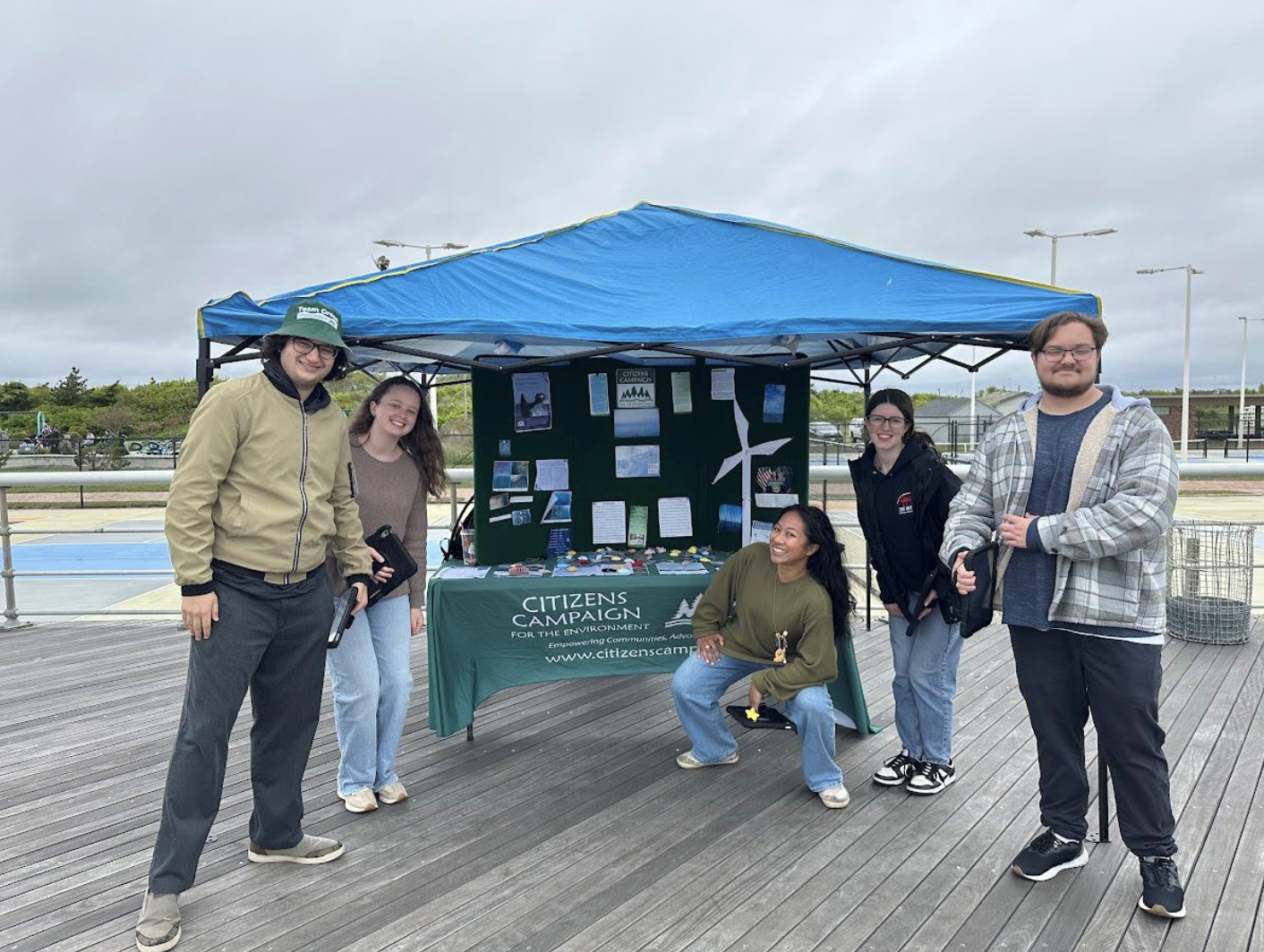
• Team Green: Jacob, Beau, Abigail, Jakob, Clare, and Paige will be interning with us this summer. They were at beaches, festivals, and events around south shore Long Island throughout June conducting education on offshore wind. Stop by if you see us at a local event and get important environmental updates and get fun prizes all summer! 

• Saying Yes to Propel Energy: Long Island, New York City and Westchester need to improve the reliability and resiliency of our energy grid to ensure capacity during high demand times. The Propel NY Energy transmission project is part of the solution, strengthening the electric grid with increased transmission capacity and helping inject more clean energy into the statewide grid. In June, we launched a public education campaign and throughout July, we will be heading out to Long Island communities to speak with people about the importance of this transmission project. Our summer interns and interns from Uniondale High School will be out and hope to see you soon! 

Saying NO to Offshore Oil and Gas Drilling
The US Bureau of Ocean Energy Management is considering its draft National Outer Continental Shelf Oil and Gas Leasing Program, which includes up to 11 new oil and gas lease sales—a step backward for our climate, ocean health, and clean energy future. While the plan doesn’t currently propose lease sales in the Atlantic, we know that continued oil and gas development threatens our climate goals, marine ecosystems, and the momentum we’re building for offshore wind. We must make it clear that any new leasing, especially along the East Coast, puts climate progress, coastal economies, and jobs at risk. We submitted comments opposing oil and gas development and thank all who weighed in to protect our oceans from drilling.

On the Long Island Sound with Uniondale High School
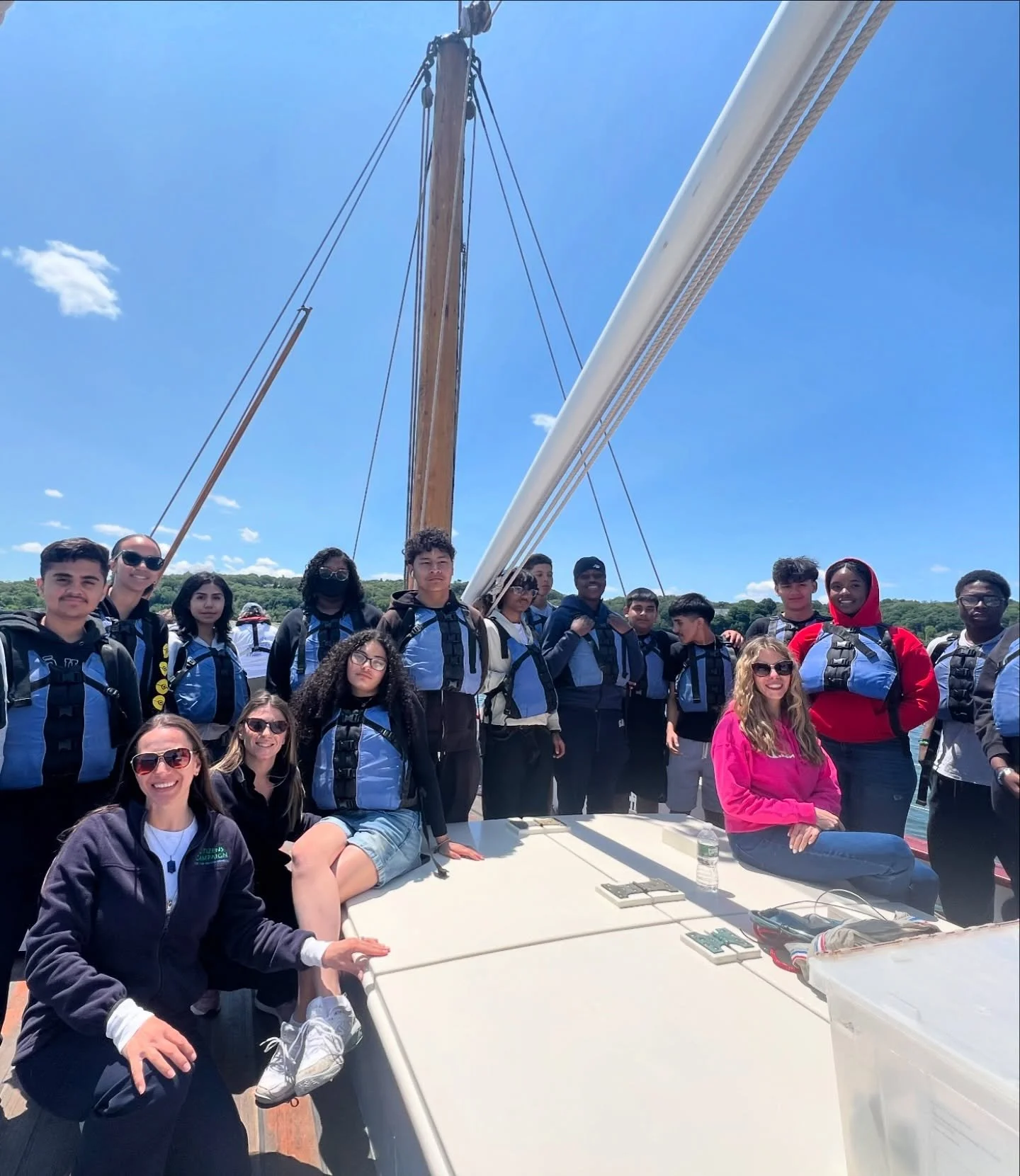
After partnering with Uniondale High School in April to talk with 250+ students about protecting Long Island Sound and combatting climate change, we headed out for field trips up to the Sound in May and June. We had an incredible time with Uniondale High School at The Waterfront Center exploring the Long Island Sound! Students interacted with marine creatures in the touch tank, participated in beach seining, and boarded the Ida May to test water quality and take part in a dredge. It was a fun and educational experience that helped deepen their understanding of the Sound and the diverse marine life that call it home. 

Raising a Glass for a Great Cause
We were thrilled to kick off ONCE Finger Lakes’ Toast for a Cause series. Thanks to all who joined us for a relaxing afternoon of wine, food, and conversation in support of our work to protect New York’s environment. ONCE generously donated 10% of the day’s sales to us, helping us continue our mission to fight for clean water, combat climate change, address toxic chemicals, and promote strong environmental policies. We had a great time sipping, snacking, and talking to the attendees about our work and how they can get involved. 

Calling for Progress on Lawrence Aviation Industries Site on Long Island 
For the last five years, environmental and community groups have worked with elected officials and government agencies to clean up Lawrence Aviation Industries property, which was a former Superfund Site. The Suffolk County Landbank Corporation and the MTA entered a contract in 2023 under which a portion of the LAI site would be transferred to the MTA for $10, for use in the modernization of the Long Island Railroad and improve transportation for Suffolk residents. The problem is that the Department of Transportation (DOT) has never signed the easement agreement necessary for the transfer and had a deadline of June 30th to sign. We held a press conference calling on Governor Hochul to compel the New York State Department of Transportation to provide the easement for the LIA property. The event had bipartisan support, bringing together elected officials from all levels of government and stakeholders from environmental groups, and community leaders. As the deadline approached, DOT got a six-month extension to sign the agreement. 

Be on the Watch for Harmful Algal Blooms
As we start enjoying summer here in New York, it is important to be aware of dangerous harmful algal blooms (HABs). HABs pose an immense threat to our communities’ drinking water, public health, outdoor recreation and wildlife. HABs are erupting across NY more frequently and more aggressively in NY waterbodies. To learn more about HABs and efforts taken to combat them on Cayuga Lake check out our short video. If you see a HAB in a lake or waterbody (looks like spilled green paint or pea soup), be sure to avoid it and report it using the DEC Suspicious Algal Bloom Report Form! 


Celebrating 40 Years!
This year we are celebrating 40 years of work to protect our air, land, and water—and fighting climate change! Your generosity and support has given us these 40 incredible years! Now we are asking you to please continue your support for our mission of empowering communities, advocating solutions for public health protection and preserving our natural world. Together we can make a difference! Your contribution helps us continue our fight for a cleaner, healthier future! Please support us today!

Legislature again passes ban on harvesting of horseshoe crabs, after 2024 Hochul veto

Legislature again passes ban on harvesting of horseshoe crabs, after 2024 Hochul veto

ALBANY — State legislators have made another run at prohibiting the harvesting of horseshoe crabs, hoping a bill they approved this week won’t be quashed by a veto.

The State Senate gave final approval late Wednesday to a bill that bans harvest of horseshoe crabs for use as bait or for biomedical purposes. The Assembly passed it a week earlier.

Suffolk County Water Authority Achieves Full Compliance with Federal PFAS Standards Six Years Early

Suffolk County Water Authority Achieves Full Compliance with Federal PFAS Standards Six Years Early

Despite widespread PFAS contamination on Long Island, SCWA delivers treated water with no PFOA or PFOS above federal limits.

The Suffolk County Water Authority announced today that all treated water it supplies to customers is in full compliance with the federal drinking water standards for PFOA and PFOS—six years ahead of the 2031 compliance deadline set by the U.S. Environmental Protection Agency (EPA).

New York state offers $1.5m in grants to protect Long Island's South Shore Estuary

New York state offers $1.5m in grants to protect Long Island's South Shore Estuary

The New York Department of State has announced the availability of $1.5 million in grants to protect, preserve, and restore the South Shore Estuary Reserve on Long Island. The funding, timed to coincide with World Oceans Month, supports the implementation of the recently adopted $3.5 million SSER Strategic Investment Plan.

Targeted to municipalities, nonprofits and academic institutions, the grants aim to improve shoreline resiliency, enhance water quality, and expand public access to water-based recreation.

NEW YORK DEPARTMENT OF STATE ANNOUNCES AVAILABILITY OF $1.5 MILLION IN GRANTS TO PROTECT, PRESERVE AND RESTORE LONG ISLAND’S SOUTH SHORE ESTUARY RESERVE

NEW YORK DEPARTMENT OF STATE ANNOUNCES AVAILABILITY OF $1.5 MILLION IN GRANTS TO PROTECT, PRESERVE AND RESTORE LONG ISLAND’S SOUTH SHORE ESTUARY RESERVE

Funding Implements Strategies to Increase Shoreline Resiliency, Water Quality and Recreational Accessibility for Long Island Residents  

Funding Coincides With and Celebrates World Oceans Month

In celebration of World Oceans Month, the New York Department of State today announced the availability of $1.5 million in funding through the South Shore Estuary Reserve (SSER) Local Assistance Grants Program. The grants will help communities advance SSER priorities, including improved water quality, shoreline resiliency, habitat health, accessible water-based recreation and tourism, environmental education and economic development.  The Program is the first step in the implementation of the $3.5 million SSER Strategic Investment Plan to guide future funding opportunities.    

U.S. Navy seeks interviews with Grumman retirees as they probe cleanup of Calverton site

U.S. Navy seeks interviews with Grumman retirees as they probe cleanup of Calverton site

When Grumman closed its Calverton weapons plant in 1996, some 3,000 employees lost their jobs.

Now, the U.S. Navy is hoping to connect with those former employees — or family members — as officials search for missing puzzle pieces in the probe of contamination at the sprawling 6,000-acre site.

Rail yard at Lawrence Aviation Industries at a halt, officials urge action

Rail yard at Lawrence Aviation Industries at a halt, officials urge action

While the Lawrence Aviation Industries site in Port Jefferson Station is clean and cleared from the superfund registry, the atmosphere around the prospective rail yard is murkier than ever.

The MTA has yet to secure the 40 acres allocated to the rail yard, which would be crucial to electrifying the Port Jefferson line. As the June 30 deadline approaches, local officials and environmental leaders met at the site on June 2 to urge the MTA to sign and for Governor Kathy Hochul to apply further pressure. Brookhaven bought 40 acres to preserve as open space and the county bought the other 40 acres to use as a solar farm.

Plastic Free July Webinar


Please join CCE and our partners in the Coastal Watershed Network, including The Nature Conservancy and Save the Sound, for an educational webinar to kick-off Plastic-Free July. The free webinar will address plastic pollution on the shoreline and in our oceans, microplastics in our soils and food system, and the use of visual art to communicate the issue of plastic waste.

We look forward to hearing from experts in our region about this pervasive issue impacting the environment and public health. There will be a discussion at the end and an opportunity to get your questions answered!

When: Tuesday, July 8, 12:00pm-1:00pm

Where: Online via Zoom, register here.

Speakers: 

  • Dr. Katharine Owens, Professor at University of Hartford, National Geographic Explorer and Fulbright Nehru Fellow

  • Dr. Jason White, Professor at Yale School of Public Health, Director of the Connecticut Agricultural Experiment Station

Thank you for joining us!

Sincerely,
All of us at CCE

Port Washington Water District to treat 'forever chemicals' in well with new carbon system

Port Washington Water District to treat 'forever chemicals' in well with new carbon system

New York State has awarded another $5 million grant to the Port Washington Water District to build a granular activated carbon treatment system designed to remove PFOA and PFOS contamination from another of its wells.

The grant will help the water district, which serves about 9,400 households, provide “water that meets or exceeds any standard out there” for removing PFOA and PFOS chemicals, district superintendent Paul Prignano said in an interview.

Environmentalists, others prod MTA to beat deadline, buy part of former Lawrence Aviation property

Environmentalists, others prod MTA to beat deadline, buy part of former Lawrence Aviation property

Residents, environmentalists and a bipartisan group of elected officials Monday called on Gov. Kathy Hochul to break the stalemate that has blocked the MTA's purchase of 40 acres of land for a new Port Jefferson railroad station.