Suffolk County officials are pointing to the Navy’s cleanup of the Bethpage plume as a precedent — and warning they expect the same urgency in Calverton, where county testing shows contamination from the former Navy-owned Grumman manufacturing site continues to move through groundwater, surface water and fish habitat while federal cleanup efforts remain largely in the study phase.
Suffolk County Pushes Navy to Clean Up EPCAL Plumes
Suffolk County says it has compiled mountains of ammunition in its fight to get the U.S. Navy to clean up plumes of numerous hazardous compounds emanating from the Enterprise Park at Calverton, including data showing fish highly contaminated with the perfluorinated compound PFOS the county says the Navy withheld for a year, and high levels of other perfluorinated compounds in the headwaters of the Peconic River.
After the U.S. Navy refused to allow the Suffolk County Health Department to present the results of its testing of wells surrounding plumes of contaminated groundwater from the former Navy-owned Grumman plant in Calverton at the February meeting of the Calverton Restoration Advisory Board (RAB), county representatives and members of the RAB took matters into their own hands Tuesday evening.
Can the E.P.A. Survive Lee Zeldin?
Last summer, more than a hundred and fifty staff members at the Environmental Protection Agency sent a letter to the agency’s head, Lee Zeldin, outlining their concerns about his leadership. Topping the list was Zeldin’s naked partisanship. The administrator often used his official communications to trash Democrats. This “politicized messaging,” the letter said, was undermining trust in the agency. So, too, were Zeldin’s gutting of the E.P.A.’s research division and his tendency to ignore the findings of its scientists. The missive noted that it reflected the staffers’ personal, rather than professional, opinions, and had been written on their own time. It ended by urging Zeldin to “correct course.”
Federal Clean Water Programs Facing 90% Cut
Tell Congress to Stand Up for Clean Water and Oppose Proposed Cuts!
New York and Connecticut’s drinking water and wastewater infrastructure is aging and failing, putting our economy, health, and environment at risk. Regrettably, the President has proposed to slash critical clean water infrastructure programs by nearly 90%, which if adopted, would severely worsen NY and CT’s clean water challenges. Significant funding cuts would hamper our ability to stop sewage overflows, treat drinking water for toxic emerging contaminants, make drinking water affordable to all, and create good-paying jobs.
While the administration has proposed massive cuts, Congress has the power to fully fund these programs in the federal budget. We need NY and CT’s Congressional Delegations to reject these draconian cuts and protect clean water funding! Contact your two U.S. Senators and Representative in the U.S. House today and urge them to support full clean water funding in the FY2027 federal budget!
BACKGROUND
A look at New York and Connecticut’s clean water challenges:
It is estimated that there are at least 555,696 lead drinking water service lines in New York and over 52,774 in CT. Lead is a toxic heavy metal—there is no safe level of exposure to lead in drinking water, especially for infants and children. All lead pipes must be replaced.
According to reports generated by New York’s Sewage Pollution Right to Know law, there are 5 overflows of raw or partially treated sewage into New York waters every day. According to reports generated by Connecticut’s Sewage Right-to-Know law, approximately 2.8 billion gallons of raw or partially treated sewage were discharged into waterways in a single year.
Across the nation, there is a water main break every two minutes, and an estimated six billion gallons of treated water is lost each day. Water main breaks not only threaten access to clean drinking water, but also close schools and businesses, cause sink holes that damage roads, and hurt local economies.
The American Society of Civil Engineers gave New York and Connecticut’s drinking water infrastructure and wastewater infrastructure grades of C- and D+, and C and C-, respectively.
While repairing and replacing New York and Connecticut’s clean water infrastructure is imperative, it is also costly. The EPA conservatively estimates that it will cost nearly $90 billion and $12 billion to upgrade NY and CT’s wastewater and drinking infrastructure over 20 years, respectively.
Federal Clean Water Infrastructure Programs are Essential to Protecting Clean Water
Congress created the Clean Water State Revolving Fund (CWSRF) in 1990 for the construction and repair of sewage infrastructure, and the Drinking Water State Revolving Fund (DWSRF) in 1996 to upgrade drinking water infrastructure and ensure safe water at the tap. Since the inception of each program, New York State has financed $37.1 billion in CWSRF projects and $10.1 billion in DWSRF projects. Connecticut has financed approximately $4.6 billion in CWSRF projects and $488 million in DWSRF projects. These programs have helped to support the construction of thousands of projects across NY and CT that have reduced harmful sewage overflows, protected drinking water from toxic contaminants, created thousands of good-paying jobs, and more!
President Proposes Massive Cuts to both Clean Water Programs
The President issued his budget request for the upcoming fiscal year. He has proposed draconian cuts to both programs, which would nearly eliminate them. His budget request includes a:
90.5% cut to the CWSRF ($1,483,861,000 cut)
86.7% cut to the DWSRF ($976,101,000 cut)
The President proposed similar drastic cuts last year—due to pushback from the public and members of Congress, the cuts were rejected and funding for both programs remained flat in the final FY26 budget. It is critical that we push back and fight for clean water once again!
Thank you for taking action!
Sincerely,
All of Us at CCE
PROTECT NEW YORK’S DRINKING WATER FROM PFAS CHEMICALS!
Governor Hochul must sign legislation to implement stronger drinking water standards for toxic PFAS “forever chemicals”
In recent years, communities across NY and the nation have discovered their drinking water sources are contaminated with harmful PFAS chemicals. PFAS are referred to as “forever chemicals” because they are very persistent, meaning they build up in our bodies and don’t break down in the environment. New science indicates there is no safe level of exposure to PFAS in drinking water and we must do more to protect public health from this growing threat.
In 2024, the U.S. EPA adopted strong standards to limit PFAS in drinking water to the lowest level that is technically feasible in order to protect public health nationwide. Under the Trump administration, the EPA is now working to delay and rollback these critical drinking water protections—putting the safety of at least 1.3 million New Yorkers at risk. To protect New Yorkers from this federal rollback, the NYS Legislature unanimously passed bipartisan legislation to strengthen the state's PFAS drinking water standards—now we need the Governor to sign the bill into law! Email Governor Hochul today!
BACKGROUND
What is PFAS and Where Does it Come From?
Per-and polyfluoroalkyl substances (PFAS) are a group of thousands of manufactured chemicals that have been used in industry and consumer products for many decades, due to their non-stick, grease-resistant and waterproof properties. PFAS is used in cookware, packaging, textiles, furniture, adhesives, paint, and numerous other products. According to the U.S. EPA, there are 3,500 industrial sites across New York State that may be handling or using PFAS chemicals.
PFAS Threatens Our Health
Studies show that human exposure to PFAS is widespread—it’s estimated that 98% of people in the U.S. have PFAS compounds in their blood. Exposure to PFAS can lead to higher rates of kidney and testicular cancer, higher cholesterol levels, thyroid problems, adverse developmental effects and decreased immune response in children, and other adverse health impacts. EPA has issued health advisories for certain PFAS chemicals, indicating that there is no safe level of exposure to these chemicals in drinking water.
PFAS Pollutes our Environment and Drinking Water
Due to widespread use of PFAS chemicals in numerous products and industries, PFAS chemicals have become ubiquitous in the environment, including drinking water. Testing has revealed some levels of PFAS in approximately 50% of public water systems across NYS, with about 250 water systems exceeding NY’s drinking water standards for two PFAS chemicals—PFOA and PFOS.
EPA’s Drinking Water Standards:
In 2024, after establishing that there is no safe level of exposure to certain PFAS chemicals in drinking water, the U.S. EPA finalized a rule to establish the first nationwide enforceable limits on toxic PFAS chemicals allowed in drinking water. For PFOA and PFOS, EPA adopted individual drinking water limits of 4 parts per trillion (ppt) per chemical. This is much stronger than New York’s current standards for PFOA and PFOS, which were set at 10 ppt in 2020. The EPA also established limits of 10 ppt for three additional PFAS chemicals (PFNA, PFHxS, and GenX). EPA’s standards represent the strongest standards that are currently technically feasible.

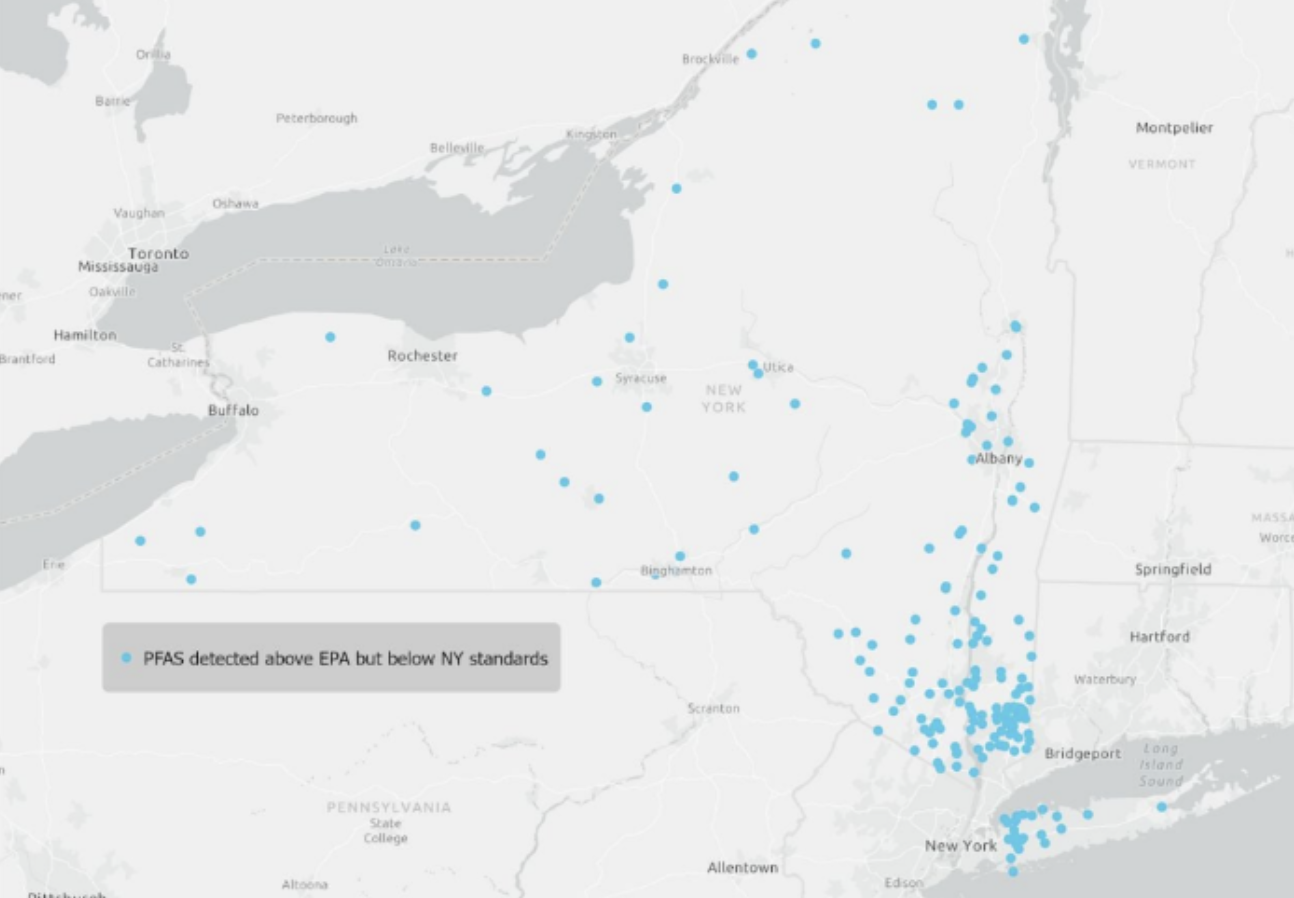
Map of Communities with PFAS above EPA, but below NY drinking water standards (representing 1.3 million New Yorkers)
SOURCE: ewg.org
Under the Trump administration, the EPA is now rolling back its PFAS drinking water standards. They are delaying implementation of drinking water standards for PFOA and PFOS by an additional two years and rescinding the drinking water standards for the additional PFAS chemicals. Rolling back these standards puts at least 1.3 million New Yorkers, the majority of whom are on Long Island, at risk to higher levels of dangerous PFAS chemicals in their drinking water.
New York State Needs More Protective Drinking Water Standards
The New York State Senate and Assembly passed legislation to codify EPA’s original 2024 drinking water standards for PFAS—protecting New Yorkers from recent Trump rollbacks. The bill would establish drinking water standards of 4 ppt each for PFOA and PFOS, 10 ppt each for PFNA, PFHxS, and GenX, and maintain the EPA’s original 2029 compliance deadline. Maine, Vermont, and Wisconsin have already taken similar action. Now we need Governor Hochul to sign the legislation codifying stronger drinking water standards for PFAS chemicals into law!
Thank you for taking action!
Sincerely,
All of us at CCE
Highlights and Happenings: May 2026
Help CCE build on our success, and support our campaigns to protect public health and the environment in NY and CT.
Make a contribution today.
Highlights
New York State’s Legislative Session Wraps Up—Budget and Legislative Highlights
The 2026-2027 NYS Budget was finalized last month and had some good news for the environment and public health which we fought hard for:
$525 million for the Clean Water Infrastructure Act (CWIA), up $25 million from last year. This funding will allow us to upgrade sewage treatment plants, filter toxic contaminants out of drinking water, replace lead drinking water pipes, upgrade failing septic systems, and more.
$425 million for the Environmental Protection Fund, which includes all-time highs of $26 million for our Ocean and Great Lakes and $3 million for the South Shore Estuary Reserve.
$1 billion Sustainable Futures Program, which plays a critical role in expanding renewable energy, saving New Yorkers money on energy bills, and cutting pollution.
The Accelerate Solar for Affordable Power (ASAP) Act, which will give a major boost to rooftop solar projects and community solar projects (allows renters, businesses, and multifamily buildings to access the benefits of solar power without installing panels on their property).
There were also some unfortunate environmental setbacks in this year’s budget, including rollbacks and delayed implementation timelines in the state’s climate law and a weakening of our State Environmental Quality Review Act.
The state legislative session recently ended with some critical CCE priority legislation getting passed by both the Senate and Assembly (these bills will still need to be signed by the Governor to become law—look for opportunities to weigh in soon):
Protecting our drinking water from PFAS “forever chemicals” (and Trump rollbacks): Requires water suppliers to strictly limit 5 PFAS chemicals often found in drinking water. While the EPA had adopted regulations in 2024 to limit these chemicals in drinking water nationwide, the Trump EPA recently announced rules to delay and roll them back.
Data Center Moratorium: The legislature enacted a one-year pause on new data centers, providing time for agencies to assess potential impacts (e.g. large water use and energy use, adverse impacts to ratepayers, pollution, and more) and determine needed environmental, energy, and economic protections.
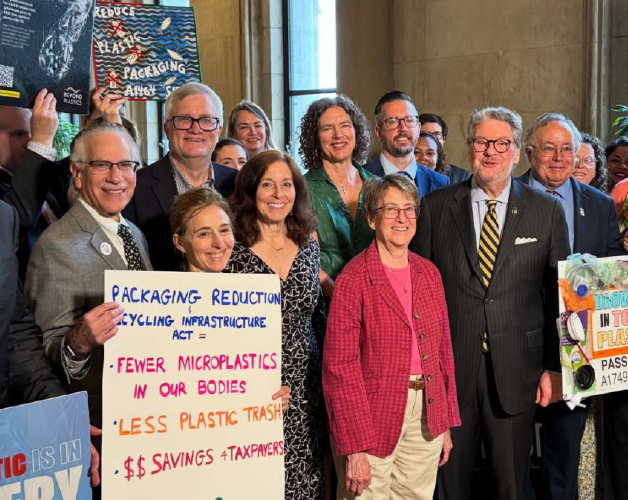
Some CCE priority bills unfortunately fell short this legislative session. Legislation to ban PFAS chemicals in common household products (cookware, dental floss, textiles, rugs, cleaning products, and more) and legislation to require manufacturers to reduce product packaging and increase recycling did not pass before session ended. We will continue to fight for these critical policies next session!
Recognition for our Fight to Save Horseshoe Crabs!
Our Executive Director, Adrienne Esposito, was honored by the New York State Marine Education Association at their annual conference in May. She was given an award for her work to save the horseshoe crab and for pushing New York State to enact protections for this critical yet vulnerable species. Thank you to NYSMEA for the award and for being a great educational partner!
Happenings
NYS Environmental Bond Act Can Help Long Island Sound
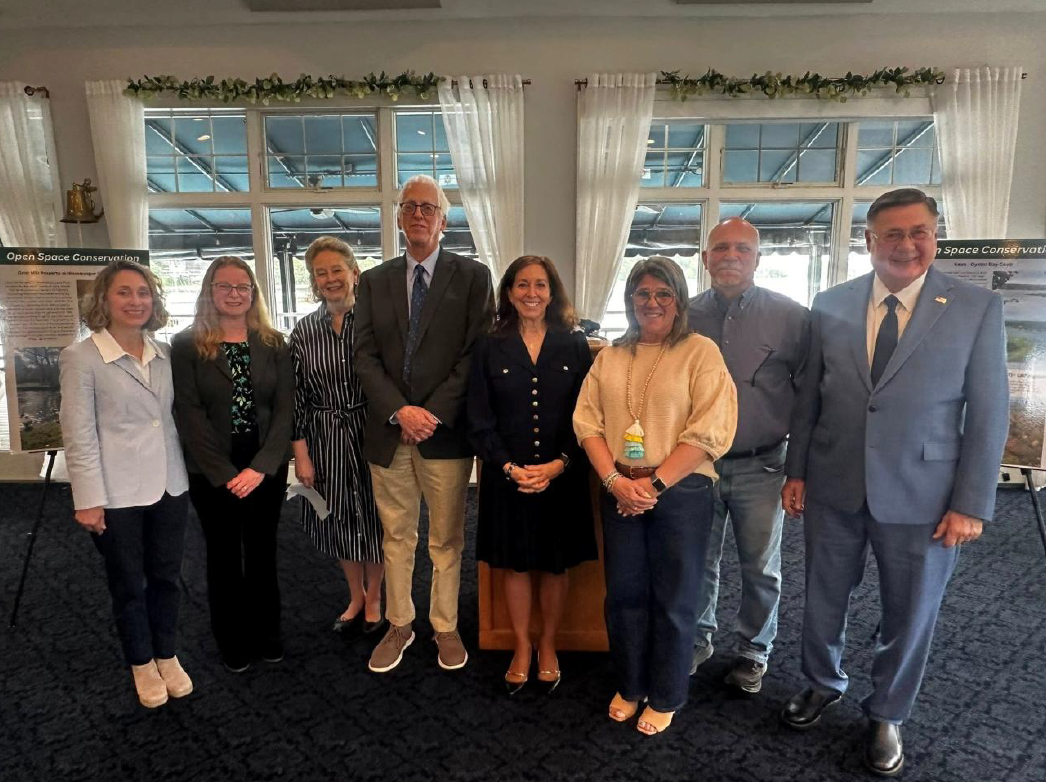
In May, we released our new report, “NYS Environmental Bond Act Can Help Long Island Sound”. The report was crafted to provide a meaningful list of priority projects that are eligible for Bond Act funding and would further the advancement of LI Sound’s water quality restoration. To date, Long Island has only received $70 million for water projects and coastal protection measures. The state has already allocated $2 billion. We joined our environmental partners and Suffolk County Executive Ed Romaine for a press conference to release the report and highlight some critical projects to protect Long Island Sound.
Long Island Sound High School Summit
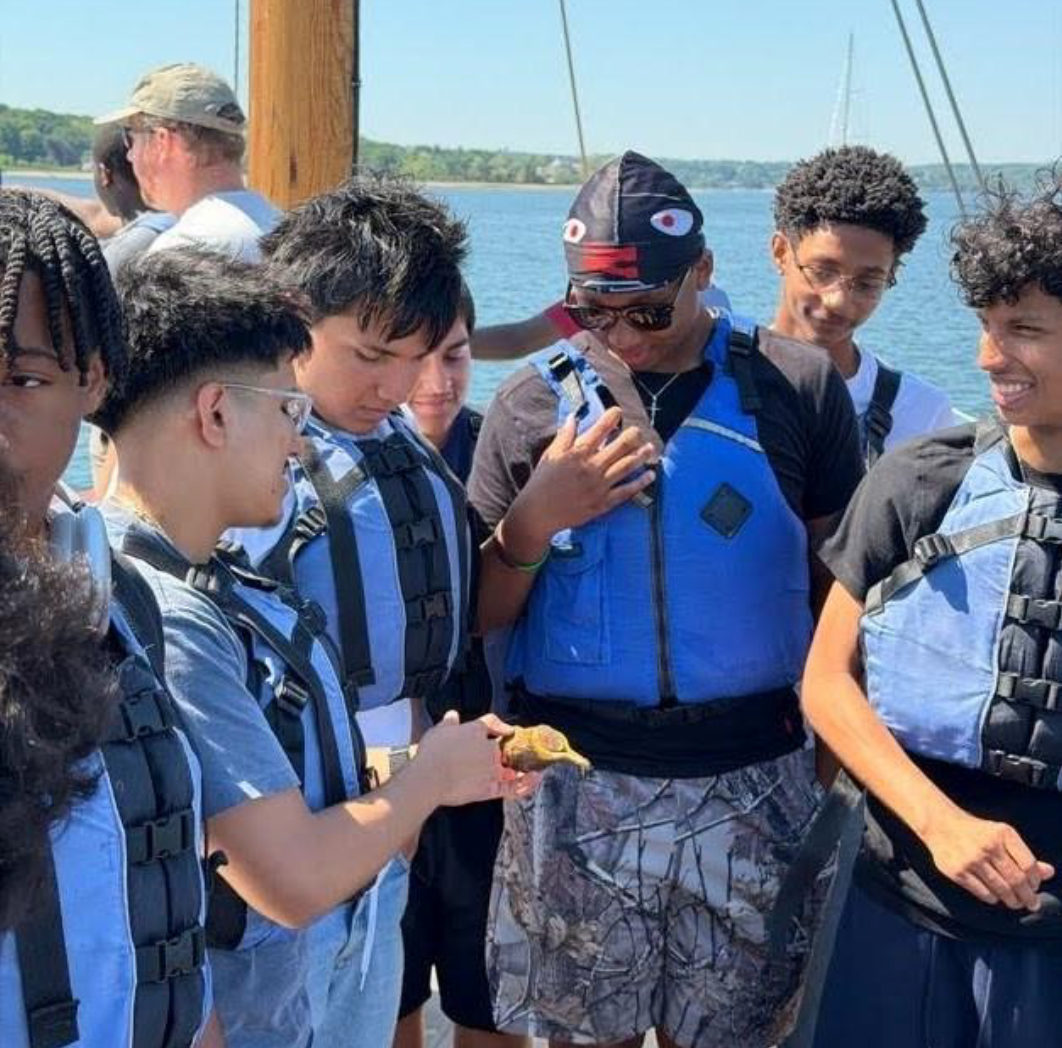
We joined our partners at Atlantic Marine Conservation Society and Friends of the Bay for our 2026 LIS High School Summit. This spring we visited these high schools to educate students on the importance of protecting the Long Island Sound and renewable energy. In May, the six high schools spent a day at The WaterFront Center in Oyster Bay exploring the Long Island Sound! Students participated in beach seining and got hands-on experience interacting with marine life such as horseshoe crabs, whelks, oysters, and hermit crabs. They also took a boat trip where they conducted water quality testing and collected measurements of oysters they found during dredging exercises. It was a fun and educational experience that helped deepen their understanding of the Sound and the diverse marine life that call it their home.
*Photo credit: Lori Devlin, Village of Patchogue
Planting a Pollinator Garden in Patchogue
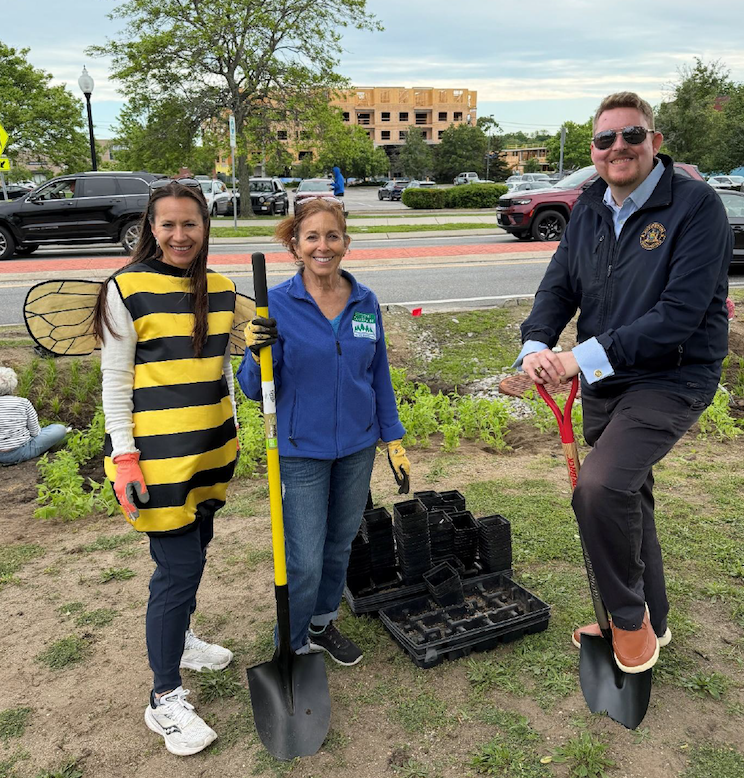
We partnered with the Village of Patchogue to design a new pollinator garden, which will help protect our pollinators while reducing polluted stormwater runoff and beautifying the area. A huge thank you to the dozens of volunteers who came out to help us plant the garden and BEE part of the solution! The grant for this garden was awarded by the Office of the NYS Attorney General and New York Community Trust through a settlement obtained by Attorney General Letitia James with Monsanto and Bayer CropScience regarding deceptive marketing of Roundup. We will be doing similar projects in Brookhaven and Port Jefferson, so stay tuned for more info. And check out our video of the Patchogue planting here.
Calverton plume at ex-Grumman site is more extensive than Navy acknowledges, Suffolk testing shows
EPA cannot backtrack on PFAS drinking water standards
This guest essay reflects the views of Adrienne Esposito, the executive director of Citizens Campaign for the Environment, an advocacy organization based on Long Island.
I've spent decades fighting water contamination on Long Island. I've sat with families who found PFAS in their well water and helped communities and water districts scramble to obtain funding for expensive treatment systems. I've testified for congressional hearings to increase the understanding that PFAS, commonly called "forever chemicals," aren't a hypothetical threat — they are a daily, sickening reality for millions of Americans.
SEQRA reform splits New York lawmakers, snagging budget talks
Efforts to revamp New York State environmental laws to lower barriers to building housing more quickly threw the state’s annual budget process into limbo.
Negotiations blew past an April 1 budget deliberation deadline, with a proposed overhaul of the State Environmental Quality Review Act emerging as a point of impasse.
Point Lookout wind turbine exceeds energy expectations
In Dec. 2011, a wind turbine standing more than 120-feet tall was installed at the Point Lookout Department of Conservation and Waterways building. The turbine was one of the town’s first steps in a clean energy initiative, which would also include the installation of solar panel arrays at town facilities, a transition to roughly 50,000 LED streetlights and more.
Community meeting planned on Calverton plume as frustration with Navy boils over
Flesh-eating bacteria concerns in Long Island waters are growing. Here's why.
'Toxic tides' of flesh-eating bacteria, cesspool runoff threaten Long Island's waters: Stony Brook report
Long Island waters are threatened by runoff from hundreds of thousands of cesspools, harmful algae and even flesh-eating bacteria, but opportunities for cleanup are "unprecedented," a prominent ecologist will tell residents, advocates and elected officials in an address Friday.
Stony Brook University Professor Christopher Gobler, whose laboratory monitors water quality across the region, will host the annual State of the Bays symposium at the Stony Brook Southampton Avram Theater on Friday at 7 p.m. He gave a preview at a news conference Tuesday in Riverhead.
Protect New Yorkers from Dangerous PFAS Chemicals
With just days left in the NYS legislative session, tell NYS Assembly leadership to pass two critical bills that would remove PFAS from drinking water and ban PFAS in many consumer products
Due to widespread use of PFAS “forever chemicals” in numerous products and industries, PFAS has become ubiquitous in our environment, including our drinking water. As a result, PFAS is now detected in the blood of 98% of Americans. That’s a major concern, since PFAS exposure is linked to serious health conditions, including cancer and adverse developmental impacts in children.
The NYS Senate has passed two bills, with strong bipartisan support, that would move toward a comprehensive solution. Now we need the NYS Assembly to pass both bills before session ends on June 4th. The two bills would:
✔ Protect our drinking water from the contamination that’s already occurred: Scientific studies have made clear that there is no safe level of PFAS in drinking water, but yet, it is being detected in the drinking water of millions of New Yorkers. Legislation would require water suppliers to strictly limit 5 PFAS chemicals often found in drinking water. While the EPA had adopted regulations in 2024 to limit these chemicals in drinking water nationwide, the Trump EPA recently announced rules to delay and roll them back. New York State must step up to protect our health just as Maine, Vermont, and Wisconsin have already done.
✔ Prevent further PFAS contamination by banning it in consumer products: We’ll never truly address the PFAS crisis if we continue to use these chemicals in new consumer products. Legislation will turn off the tap to more PFAS in our environment by banning it in products we use every day, including cookware, dental floss, textiles, rugs, cleaning products, and more.
Email the Speaker of the NYS Assembly today and urge him to allow both bills to receive a floor vote before the end of session. If you have an extra minute, call his office at 518-455-3791 and urge the Assembly to pass the Ban on PFAS in Consumer Products (A.7738A) and PFAS Drinking Water Protection bill (A.8634B).
Thank you for taking action!
Sincerely,
All of Us at CCE
As climate deniers score, Earth Day’s down – but not out
Unnatural selection: As scientific ignorance infects the nation, it's not easy being green -- even on Earth Day.
Earth Day is not what it used to be, in amazing and terrible ways.
LIPA, labor and environmental groups highlight strong first year for South Fork wind
Officials say that reliability proved especially important during this winter’s cold snaps, when energy demand surged and fossil‑fuel prices spiked.
The South Fork Wind project is marking its first full year of operation, and new data released this week shows the nation’s first utility‑scale offshore wind farm is performing even better than expected. Leaders from LIPA, labor unions, environmental groups and the offshore wind industry gathered on Long Island to highlight the results, which show the 12‑turbine project generated electricity on 99% of days last year and reached a 50% capacity factor—a level comparable to traditional power plants during key demand periods.
Brookhaven officials defend long-term plan for landfill as residents demand immediate action
Discussing climate initiatives for Earth Day
Brookhaven Presents Cleanup Plan for Landfill Plume, but Some Say Measures are Inadequate
The Town of Brookhaven held a public meeting on March 27 to present its corrective measures plan for a toxic plume emanating from the town landfill in Yaphank, but community advocates say the proposal falls far short of what’s needed.
In 2023, the New York State Department of Environmental Conservation ordered the town to investigate and plan to remediate the plume, which now extends 1.7 miles from the portions of the landfill constructed between 1971 and 1989 south toward Bellport Bay. Groundwater testing detected PFAS (so-called “forever chemicals”) and 1,4-dioxane in the plume. Both contaminants have been linked to a range of health issues, including cancer.
Toxic forever chemicals raise concerns about garden, farm products on Long Island
It was the first week of spring and Deborah Harris, of Riverhead, was visiting her local garden center, where she picked up two bags of fertilizer that she was told worked like a charm to keep deer off her hosta plants.
But after being advised to read the label for the product, Harris discovered the origins of the product were a sewage treatment facility in the Midwest, including the disclosure that it contained biosolids, one of the byproducts of waste treatment.